Microeconomics in IB Economics: Individuals, Firms, Markets and Government Intervention
A clear overview of IB Microeconomics, covering demand, supply, market equilibrium, elasticity, government intervention and market failure.

Microeconomics in IB Economics: Individuals, Firms, Markets and Government Intervention
Microeconomics studies how individuals, firms and governments make decisions in specific markets. Instead of looking at the whole economy at once, microeconomics focuses on smaller units: consumers buying goods, firms producing output, prices changing in markets, and governments intervening when markets do not produce desirable outcomes.
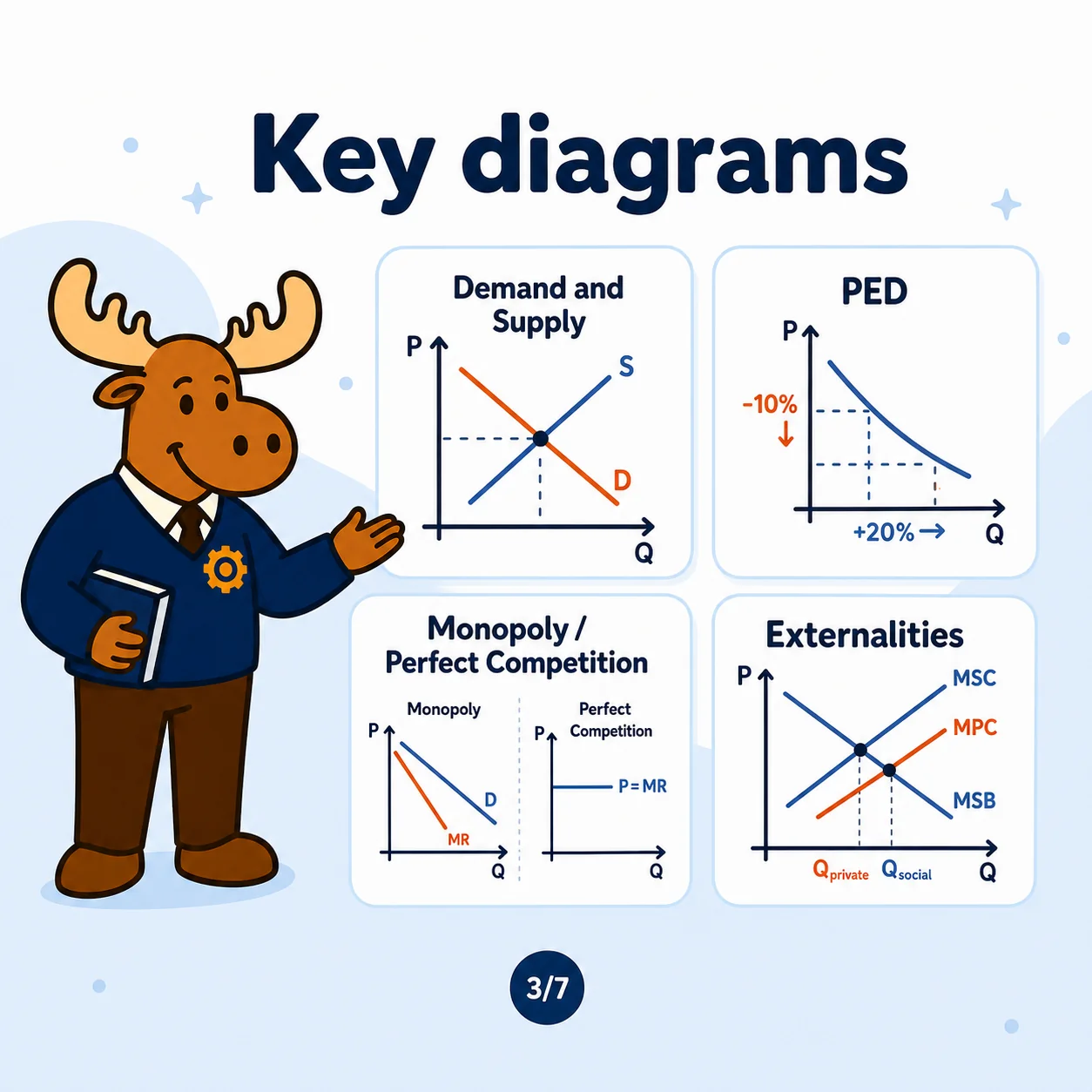
For IB Economics students, microeconomics is one of the most diagram-heavy parts of the course. Demand and supply diagrams, elasticity diagrams, tax diagrams, subsidy diagrams, price control diagrams and externality diagrams all build from the same basic logic: incentives affect behaviour, and behaviour affects market outcomes.
The key is not just to memorise diagrams. Strong IB answers explain why curves shift, what happens to price and quantity, how welfare changes, and whether the outcome is efficient or fair.

What microeconomics is really about
Microeconomics is about choice under scarcity in individual markets. Consumers have limited income, so they choose between goods and services. Firms have limited resources, so they choose what to produce, how much to produce and at what price. Governments face trade-offs when deciding whether to regulate, tax, subsidise or provide goods directly.
A market is any arrangement where buyers and sellers interact to exchange goods or services. This can be a physical market, such as a food market, or a digital market, such as an online platform.
In a competitive market, prices help allocate resources. If consumers want more of a good, demand may rise. If producers find it more profitable to supply a good, supply may rise. The interaction of demand and supply determines equilibrium price and quantity.
This makes microeconomics central to the IB course because it explains how market economies coordinate millions of individual decisions without a single planner deciding every outcome.
Demand: the consumer side of the market
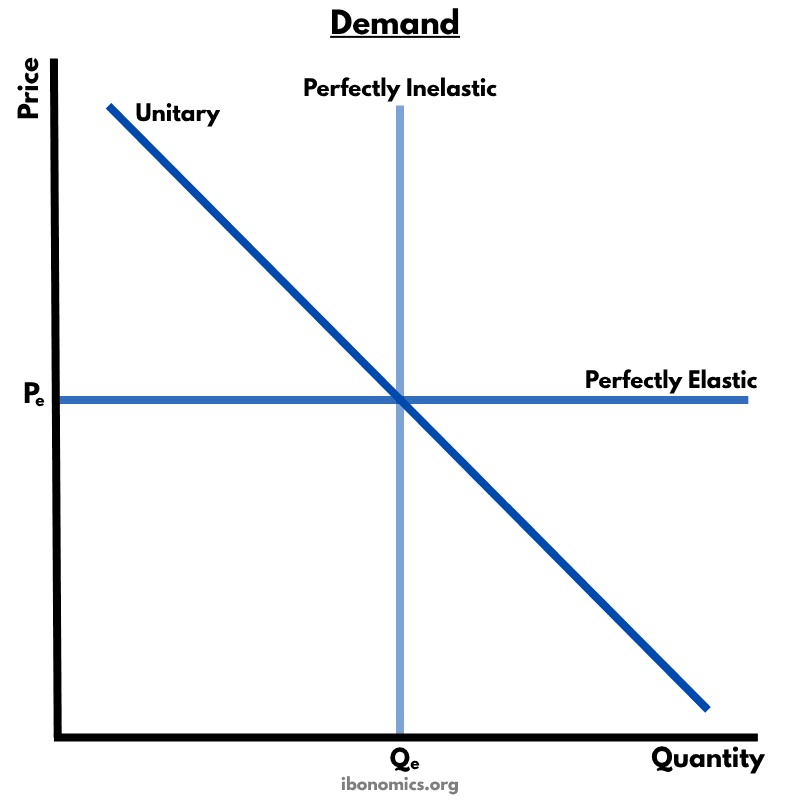
Demand shows the quantity of a good or service that consumers are willing and able to buy at different prices over a given time period.
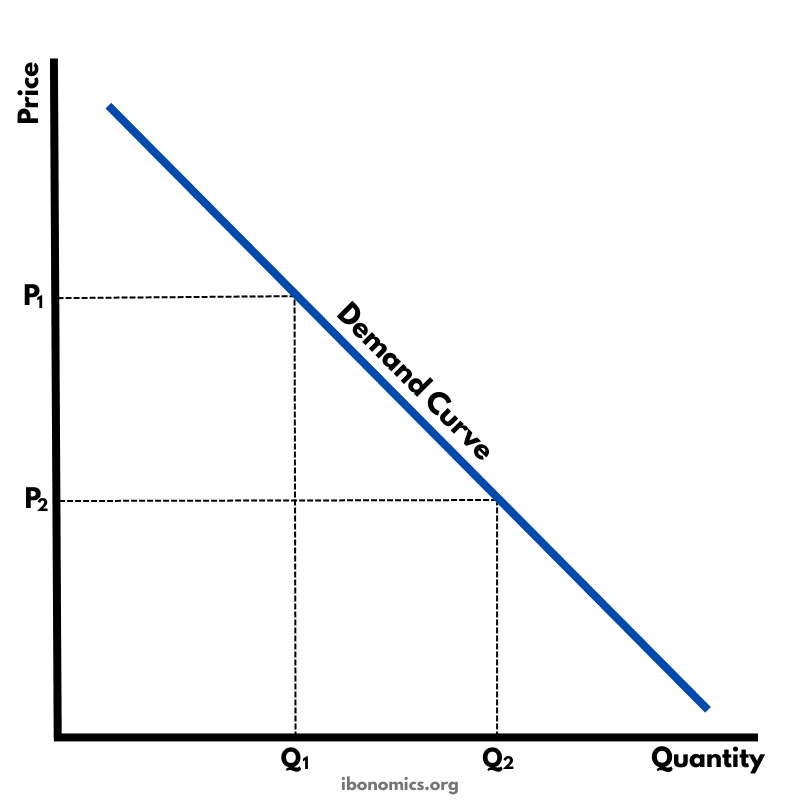
The law of demand states that, ceteris paribus, as price falls, quantity demanded rises; as price rises, quantity demanded falls. This creates a downward-sloping demand curve.
In a demand diagram, price is on the vertical axis and quantity is on the horizontal axis. A change in price causes a movement along the demand curve. For example, if the price of cinema tickets falls, consumers may buy more tickets. The demand curve itself does not shift because the price of the good has changed.
A shift of the demand curve happens when a non-price determinant of demand changes. These determinants include income, tastes, prices of substitutes and complements, expectations, population changes and advertising.
This distinction is a common IB exam issue. A lower price causes an extension of demand. Higher income for a normal good causes demand to shift right.
You can review this in the law of demand and the broader demand unit.
Supply: the producer side of the market
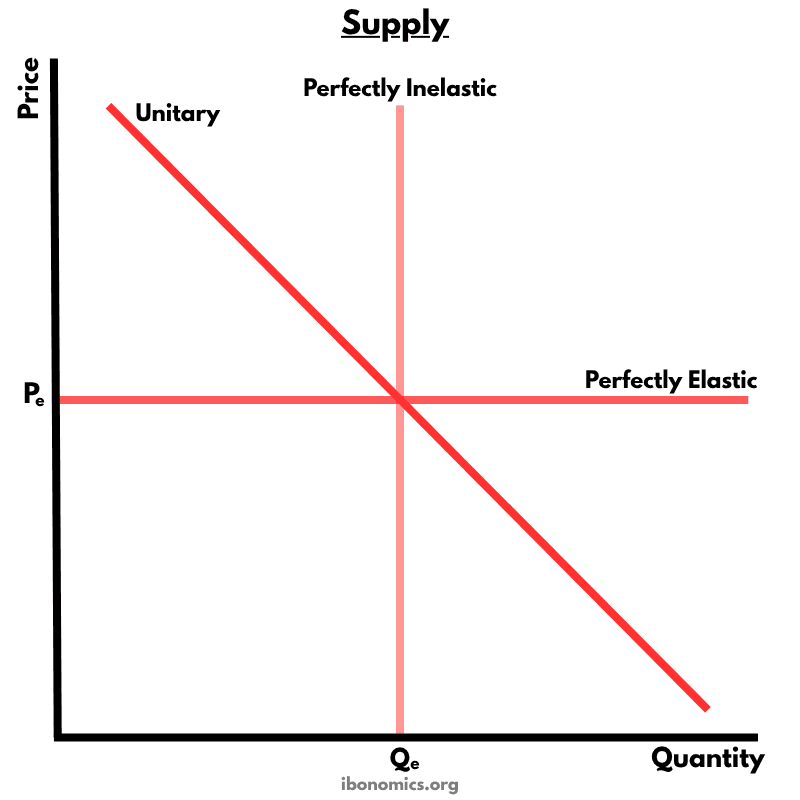
Supply shows the quantity of a good or service that producers are willing and able to sell at different prices over a given time period.
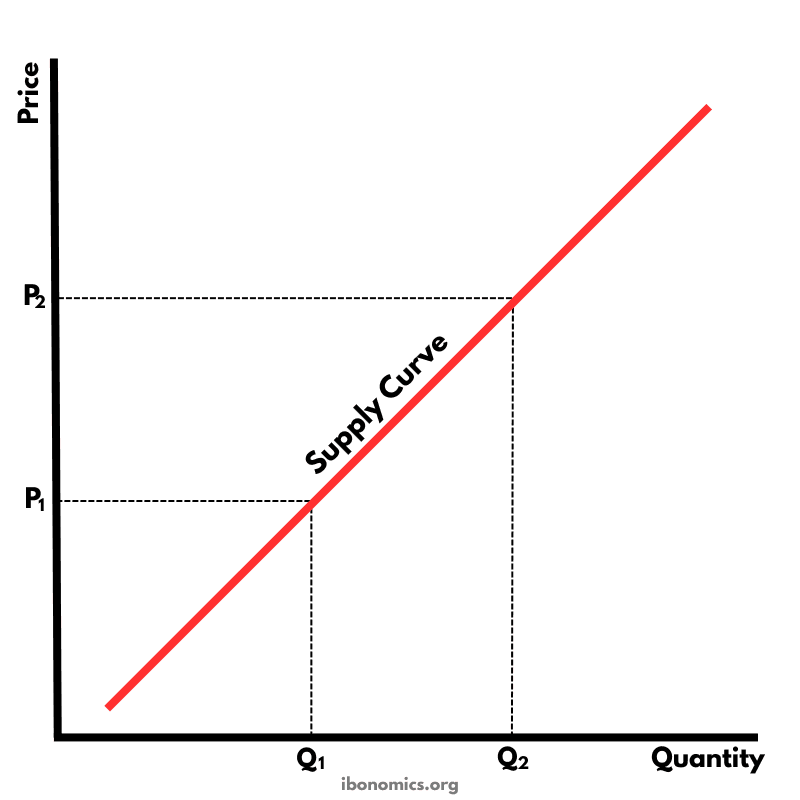
The law of supply states that, ceteris paribus, as price rises, quantity supplied rises; as price falls, quantity supplied falls. This creates an upward-sloping supply curve.
In a supply diagram, price is on the vertical axis and quantity is on the horizontal axis. A change in price causes a movement along the supply curve. For example, if the price of coffee rises, producers may be willing to supply more coffee because production becomes more profitable.
A shift of the supply curve happens when a non-price determinant of supply changes. These determinants include costs of production, indirect taxes, subsidies, technology, expectations, the number of firms and weather conditions for agricultural goods.
If production costs rise, supply shifts left. At each price, firms are now willing and able to produce less. If technology improves, supply shifts right because firms can produce more at each price.
This is explained further in the law of supply and the broader supply unit.

Competitive market equilibrium
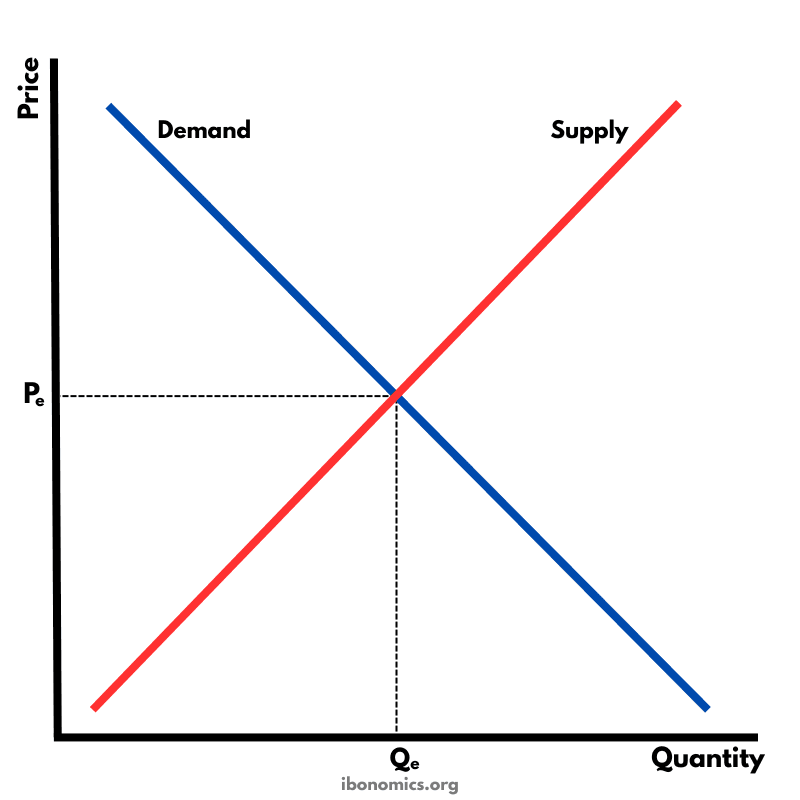
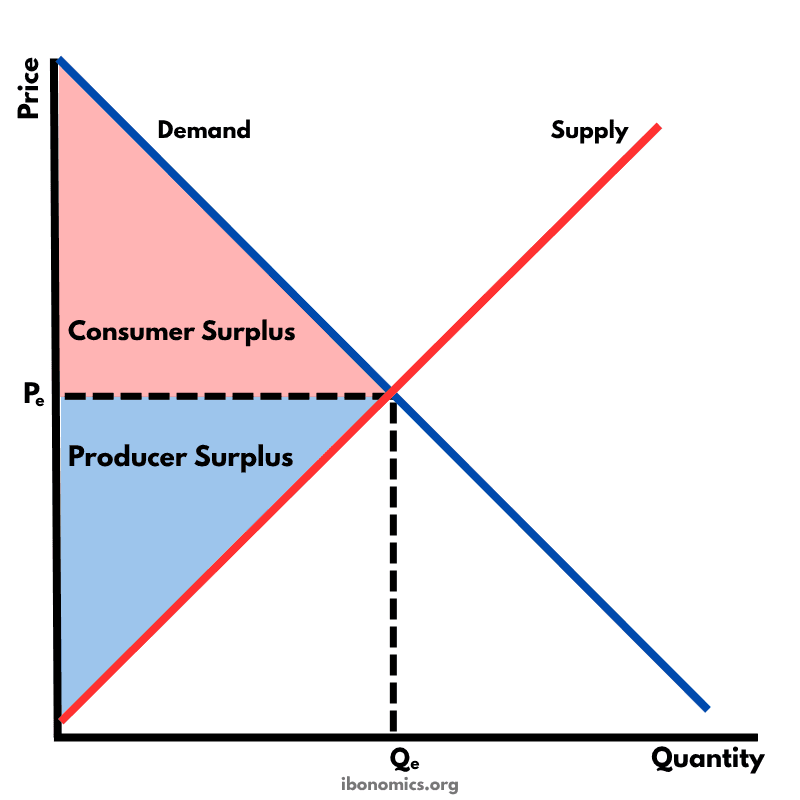
Market equilibrium occurs where quantity demanded equals quantity supplied. On a demand and supply diagram, this is where the demand curve and supply curve intersect.
The vertical axis shows price, and the horizontal axis shows quantity. The equilibrium price is the price at the intersection. The equilibrium quantity is the quantity traded at that price.
If the price is above equilibrium, quantity supplied exceeds quantity demanded. This creates a surplus. Firms may lower prices to sell excess stock, causing a movement down the supply curve and a movement down the demand curve until equilibrium is restored.
If the price is below equilibrium, quantity demanded exceeds quantity supplied. This creates a shortage. Consumers compete for the limited quantity available, putting upward pressure on price until the market moves back toward equilibrium.
When demand shifts right, equilibrium price and quantity both increase, assuming supply stays fixed. When supply shifts right, equilibrium quantity increases and equilibrium price falls, assuming demand stays fixed. These comparative static changes are essential for IB diagrams.
For a focused explanation, see market equilibrium and competitive market equilibrium.
Elasticity: measuring responsiveness
Elasticity measures how responsive one variable is to a change in another variable. In microeconomics, the most important forms are price elasticity of demand and price elasticity of supply.
Price elasticity of demand measures how responsive quantity demanded is to a change in price. If consumers respond strongly to a price change, demand is price elastic. If consumers respond weakly, demand is price inelastic.
This matters for firms because elasticity affects total revenue. If demand is price elastic, a price increase may reduce total revenue because quantity demanded falls proportionally more than price rises. If demand is price inelastic, a price increase may raise total revenue because quantity demanded falls proportionally less than price rises.
Price elasticity of supply measures how responsive quantity supplied is to a change in price. Supply tends to be more elastic when firms can increase production quickly, spare capacity exists, and production time is short. Supply tends to be more inelastic when production takes time or resources are difficult to reallocate.
Elasticity is useful in evaluation. For example, the effect of a tax on cigarettes depends partly on how price elastic demand is. If demand is inelastic, quantity falls only slightly, but government tax revenue may be high.
You can continue with elasticities of demand and elasticity of supply.
Government intervention in markets
Governments intervene in markets when they want to change market outcomes. This may be done to improve efficiency, protect consumers, support producers, reduce inequality, raise revenue or correct market failure.
Common forms of government intervention include indirect taxes, subsidies, price ceilings, price floors, regulation and direct provision.
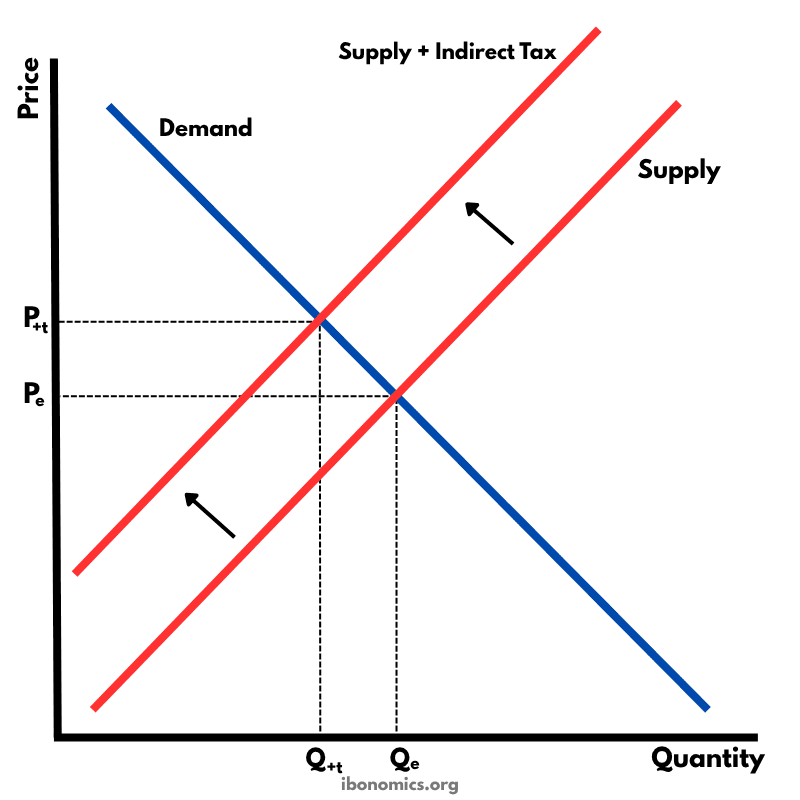
An indirect tax increases firms’ costs of production, so the supply curve shifts left. On a demand and supply diagram, this raises the price paid by consumers and reduces the equilibrium quantity. The size of the effect depends on the elasticities of demand and supply.
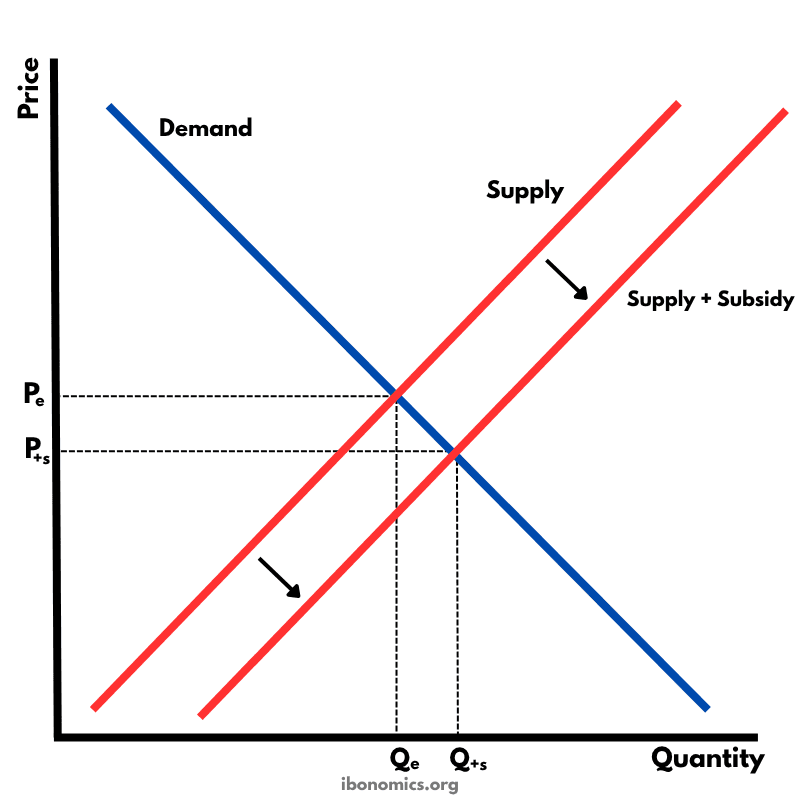
A subsidy lowers firms’ costs of production, so the supply curve shifts right. This lowers the price paid by consumers and increases the quantity traded. Subsidies may be used to encourage consumption of goods with positive externalities, such as education or renewable energy.
A price ceiling is a maximum legal price, usually set below equilibrium to make a good more affordable. If effective, it causes a shortage because quantity demanded exceeds quantity supplied. A price floor is a minimum legal price, usually set above equilibrium to support producers or workers. If effective, it causes a surplus because quantity supplied exceeds quantity demanded.
Government intervention is not automatically good or bad. It depends on the objective, the size of the intervention, elasticities, administrative costs, unintended consequences and the impact on different stakeholders.
This is covered in the role of government in microeconomics.
Market failure and externalities
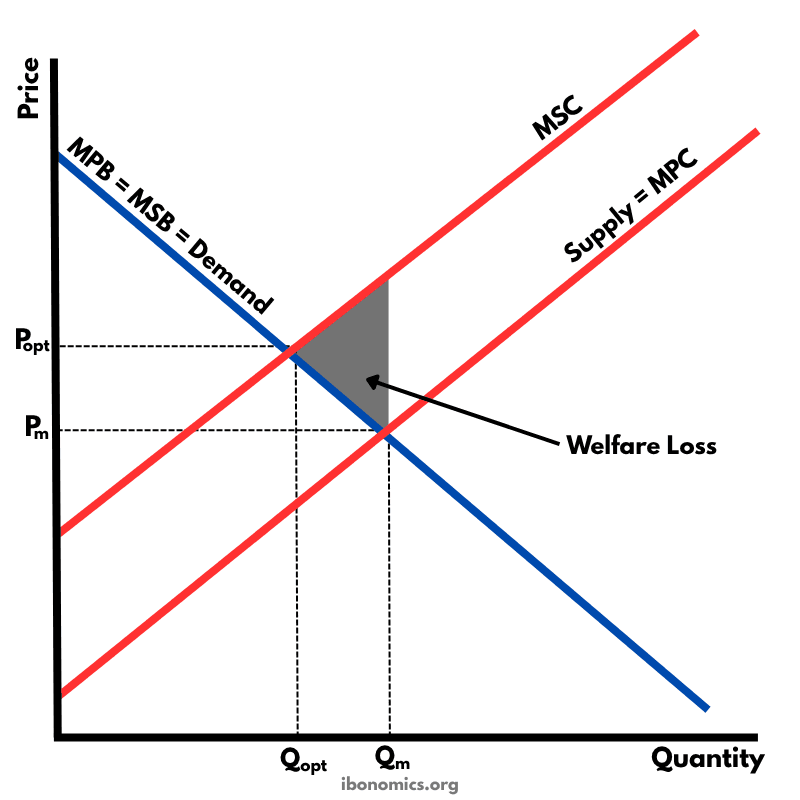
Market failure occurs when the free market fails to allocate resources efficiently. In IB Microeconomics, this often means that marginal social benefit does not equal marginal social cost.
An externality exists when the production or consumption of a good affects a third party not directly involved in the transaction. A negative externality creates an external cost, while a positive externality creates an external benefit.
For example, pollution from factory production is a negative production externality. The firm and its consumers may benefit from the good, but nearby communities may face health or environmental costs. If these external costs are ignored by the market, the good is overproduced relative to the socially efficient level.
Education can create positive consumption externalities. The individual student benefits, but society may also benefit from a more skilled workforce, higher productivity and greater civic participation. If these external benefits are ignored, education may be underconsumed relative to the socially efficient level.
Externality diagrams are different from basic demand and supply diagrams. They often compare private costs or benefits with social costs or benefits. The aim is to show the welfare loss created when the market equilibrium differs from the socially optimal level of output.
For more detail, see market failure, externalities and common pool resources.

IB exam relevance and common mistakes
Microeconomics is highly relevant for IB exams because it combines definitions, diagrams, calculations, real-world examples and evaluation.
A strong answer usually does four things. First, it defines the key terms precisely. Second, it draws and explains the correct diagram. Third, it applies the theory to a specific market or policy. Fourth, it evaluates the outcome using stakeholders, elasticities, time periods and possible unintended consequences.
One common mistake is confusing a movement along a curve with a shift of a curve. A change in the price of the good itself causes a movement along demand or supply. A change in a non-price determinant causes the whole curve to shift.
Another common mistake is labelling diagrams poorly. IB diagrams should have clear axes, curves, equilibrium points and direction of change. If a tax shifts supply left, the diagram should make clear that price rises, quantity falls, and the new equilibrium is different from the original equilibrium.
Students also sometimes describe government intervention as if it always improves the market. This is too simplistic. A subsidy may increase consumption of a beneficial good, but it also has an opportunity cost for the government. A price ceiling may improve affordability for some consumers, but it can create shortages and reduce producer incentives.
Evaluation is what turns a basic answer into a stronger answer.
Real-world evaluation: markets are useful but imperfect
Microeconomics helps explain why markets can be efficient. Prices create signals and incentives. High prices may signal scarcity and encourage producers to increase supply. Low prices may signal weak demand and encourage resources to move elsewhere.
However, markets do not always produce outcomes that society considers desirable. A market outcome may be efficient in a narrow private sense but unequal, environmentally damaging or harmful to long-term welfare. This is why governments often intervene.
The difficulty is that intervention also involves trade-offs. Taxes can reduce harmful consumption but may be regressive. Subsidies can encourage beneficial consumption but may strain government budgets. Regulation can protect consumers or the environment but may increase firms’ costs.
IB Economics does not require students to argue that markets or governments are always better. The strongest responses explain the likely effects, then evaluate whether the intervention is appropriate in context.
Conclusion
Microeconomics in IB Economics is about how individuals, firms and governments make choices in markets. Demand and supply explain how prices and quantities are determined. Elasticity explains responsiveness. Government intervention shows how policy can change market outcomes. Market failure explains why free markets may sometimes allocate resources inefficiently.
The central skill is connecting theory to real-world decision-making. When you understand how incentives affect consumers and producers, microeconomics becomes much more than diagrams. It becomes a way to analyse prices, policies, welfare and trade-offs in everyday markets.
Related syllabus topics
Demand
Unit 2.1: Demand
Supply
Unit 2.2: Supply
Competitive Market Equilibrium
Unit 2.3: Competitive Market Equilibrium
Elasticities of Demand
Unit 2.5: Elasticities of Demand
Elasticity of Supply
Unit 2.6: Elasticity of Supply
Role of Government in Microeconomics
Unit 2.7: Role of Government in Microeconomics
Market Failure: Externalities and Common Pool Resources
Unit 2.8: Market Failure: Externalities and Common Pool Resources
Market Failure: Public Goods
Unit 2.9: Market Failure: Public Goods
Market Failure: Market Power
Unit 2.11: Market Failure: Market Power