UK-Funded Vaccination: A Positive Consumption Externality
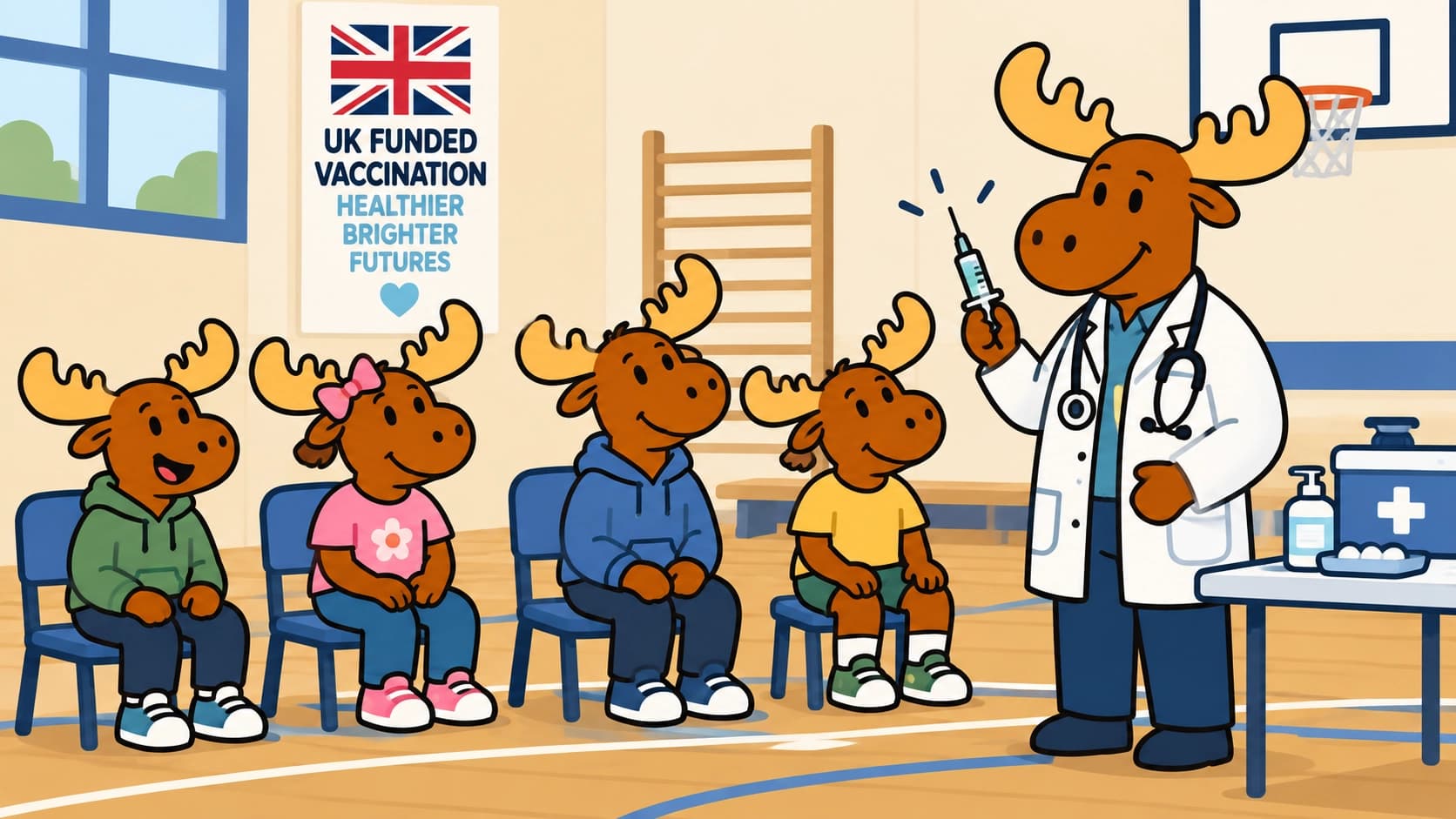
The UK government funds NHS vaccination programmes because vaccines protect individuals and also reduce risks for other people.
Economic relevance
Subsidy Policy
Key figures
Government-funded programme
2026–27
The Department of Health and Social Care's public health agreement funds NHS England to commission national immunisation programmes in England.
Flu uptake target
75%
For 2026–27, NHS England is expected to meet the WHO target of 75% flu-vaccine uptake among people aged 65 and over.
Routine childhood schedule
Multiple vaccines
The NHS routine schedule includes vaccines against diseases such as measles, mumps, rubella, polio, meningitis and hepatitis B.
At a glance
- Vaccination creates a positive consumption externality because the vaccinated person benefits, while other people may also face a lower risk of infection.
- The UK government funds national vaccination programmes through the NHS so eligible people can receive vaccines without paying the full market price.
- In England, NHS England is responsible for commissioning programmes including flu, COVID-19, HPV, MMRV, RSV and other routine vaccinations.
- Government funding can increase vaccination towards the socially efficient level, but uptake may still remain below target if people are hesitant or find access difficult.
Background
Vaccination is a clear example of a positive externality of consumption. The person receiving the vaccine gains a private benefit because they are less likely to become seriously ill. Other people can also benefit because vaccination can reduce the spread of infectious disease.
This means the marginal social benefit (MSB) of vaccination can be greater than the marginal private benefit (MPB) received by the person being vaccinated. If people only consider their own private benefit and must pay the full cost themselves, the market may provide fewer vaccinations than is socially desirable.
The World Health Organization explains that when many people are vaccinated, a disease has greater difficulty spreading through the community. This can also help protect people who cannot safely be vaccinated.
What happened
The UK government funds national vaccination programmes through the NHS. In England, the Secretary of State for Health and Social Care delegates responsibility for national immunisation programmes to NHS England under the public health functions agreement.
For 2026–27, the agreement requires NHS England to secure vaccination programmes including seasonal flu, COVID-19, HPV, MMRV, meningitis, RSV, shingles and several routine childhood vaccinations. Funding for these services forms part of NHS England's overall government funding envelope, with some vaccination programmes funded through separate streams.
The purpose of this public provision is to make vaccination widely available rather than leaving consumers to buy vaccines privately at the full market price. The government also sets uptake goals. For example, the 2026–27 programme aims to reach 75% flu-vaccine uptake among people aged 65 and over.
By funding and providing vaccines through the NHS, the government lowers the effective price faced by eligible consumers and makes access easier. This can increase consumption towards the socially efficient level.
Timeline
30 March 2026
The Department of Health and Social Care published the NHS public health functions agreement for 2026–27.
1 July 2026
The updated routine immunisation schedule for children and adults came into effect.
2026–27
NHS England continued to commission government-funded national vaccination programmes including flu, COVID-19, HPV, MMRV and RSV.
Using this in the exam
Use this case in an answer about positive consumption externalities or government subsidies and public provision.
First explain the market failure. A vaccinated person receives a private health benefit, but other people also benefit because disease transmission can fall. Therefore MSB is greater than MPB and the free market may provide fewer vaccinations than the socially efficient quantity.
Then explain the government response. The UK government funds vaccination through the NHS, lowering the price faced by eligible consumers and making vaccines easier to access. This can increase demand and move consumption closer to the socially efficient level.
In the positive consumption externality diagram, show MSB above MPB and the socially efficient quantity to the right of the market quantity.
For evaluation, remember that making vaccines free does not guarantee full uptake. Vaccine hesitancy, lack of information or difficulty accessing services may still prevent consumption from reaching the socially efficient level.
Syllabus topics
Questions this example can answer
- Explain why vaccination can create a positive externality of consumption.
- Using a real-world example, evaluate government funding as a response to positive externalities.
- Discuss whether subsidies and public provision can correct the under-consumption of merit goods.
Evaluation
Arguments in favour
Government funding removes much of the price barrier
Eligible people can receive NHS vaccines without paying the full market price. Lowering the private cost can increase vaccination and move consumption closer to the socially efficient level.
Higher vaccination can benefit third parties
When more people are vaccinated, infectious diseases can spread less easily. This creates an external benefit for other people, including some who cannot safely be vaccinated.
Arguments against
Free provision does not guarantee high uptake
Some people may still avoid vaccination because of hesitancy, poor information or difficulty reaching vaccination services. Government funding may therefore need to be combined with information campaigns and easier access.
Public funding has an opportunity cost
Money spent on vaccination cannot be spent on other NHS services. The government must compare the health benefits of vaccination with other possible uses of limited healthcare funding.
Context and assumptions
The size of the external benefit differs between vaccines
Vaccines differ in how strongly they reduce infection and transmission. The positive externality is therefore larger for some diseases than for others.
Access matters as well as price
The government also uses schools, GP practices and pharmacies to make vaccines easier to obtain. If access is poor, a zero price alone may not be enough to raise uptake.
Key terms
- Positive externality of consumption
- An external benefit received by third parties when a good or service is consumed, causing marginal social benefit to exceed marginal private benefit.Taught in Unit 2.8: Market Failure: Externalities and Common Pool Resources
- Marginal private benefit (MPB)
- The additional benefit received by the consumer from consuming one more unit of a good or service.
- Subsidy
- Financial support from the government that lowers the cost of producing or consuming a good or service.Taught in Unit 2.7: Role of Government in Microeconomics
- Public provision
- The direct provision or funding of a good or service by the government.
- Market failure
- A situation where the free market fails to allocate resources efficiently.
References
Sources
- 01
NHS public health functions agreement 2026 to 2027
Department of Health and Social Care
- 02
Public health commissioning in the NHS: 2026 to 2027
Department of Health and Social Care
- 03
Complete routine immunisation schedule from 1 July 2026
UK Health Security Agency
- 04
How do vaccines work?
World Health Organization
Related case studies
More microeconomics examples you can use in the same answer
An example of government intervention during the Great Depression, where U.S. farmers received subsidies under the Agricultural Adjustment Act (AAA) to reduce overproduction and stabilize prices.
EU countries use renewable-energy support schemes and auctions to encourage investment, increase clean-energy output and support climate goals.
South Africa taxes vaping liquid to discourage consumption and raise revenue, illustrating how indirect taxes can address market failure.