Game Theory and Prisoner's Dilemma in Oligopoly
Microeconomics
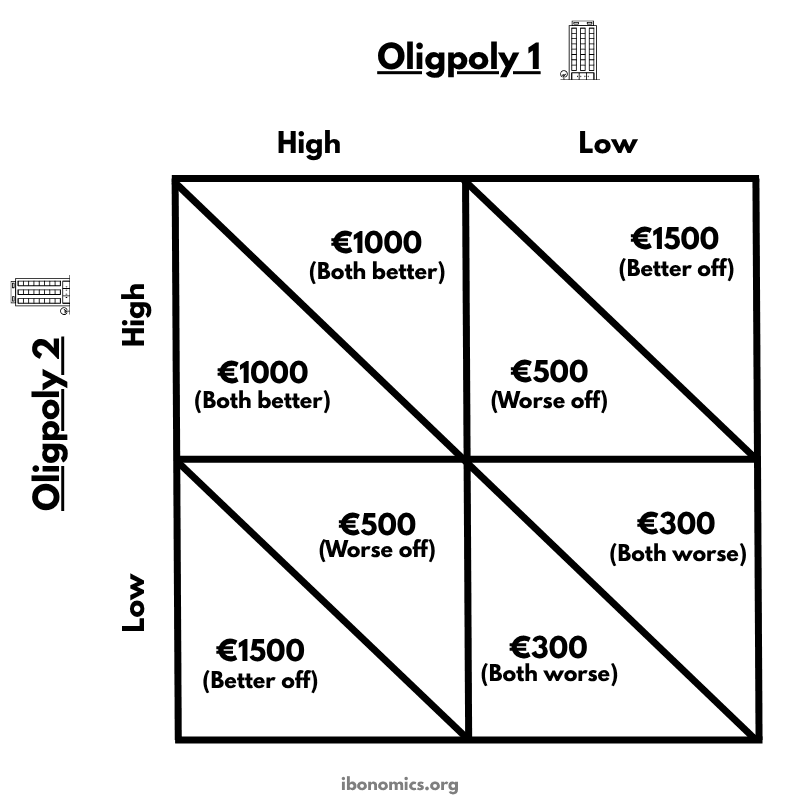
A payoff matrix showing the prisoner's dilemma in an oligopoly, where two interdependent firms choose between a high price and a low price.
Curves and Elements
oligopoly 1
Oligopoly 1: One of the two interdependent firms choosing between a high price and a low price.
oligopoly 2
Oligopoly 2: The other interdependent firm choosing between a high price and a low price.
payoffs
Payoffs: The profits each firm receives under each combination of strategies, shown in euros.
cooperative outcome
Cooperative Outcome: If both firms choose a high price, both earn €1000, which is better for both firms collectively.
non cooperative outcome
Non-cooperative Outcome: If both firms choose a low price, both earn €300, which is worse for both firms collectively.
prisoners dilemma
Prisoner's Dilemma: Each firm has an incentive to lower price individually, but if both firms do this, both firms are worse off.
Game theory examines the strategic behavior of firms that are interdependent, meaning each firm’s decision affects the other.
The payoff matrix shows the prisoner's dilemma faced by two oligopolists when each chooses either a high price or a low price.
If both firms choose a high price, both earn €1000, which is the cooperative outcome.
Each firm has an incentive to lower price to increase its own payoff to €1500, but if both firms lower price, both earn only €300.
This shows the prisoner's dilemma because individual self-interest can lead both firms to a worse outcome than cooperation.
More Microeconomics Diagrams
Explore other diagrams from the same unit to deepen your understanding
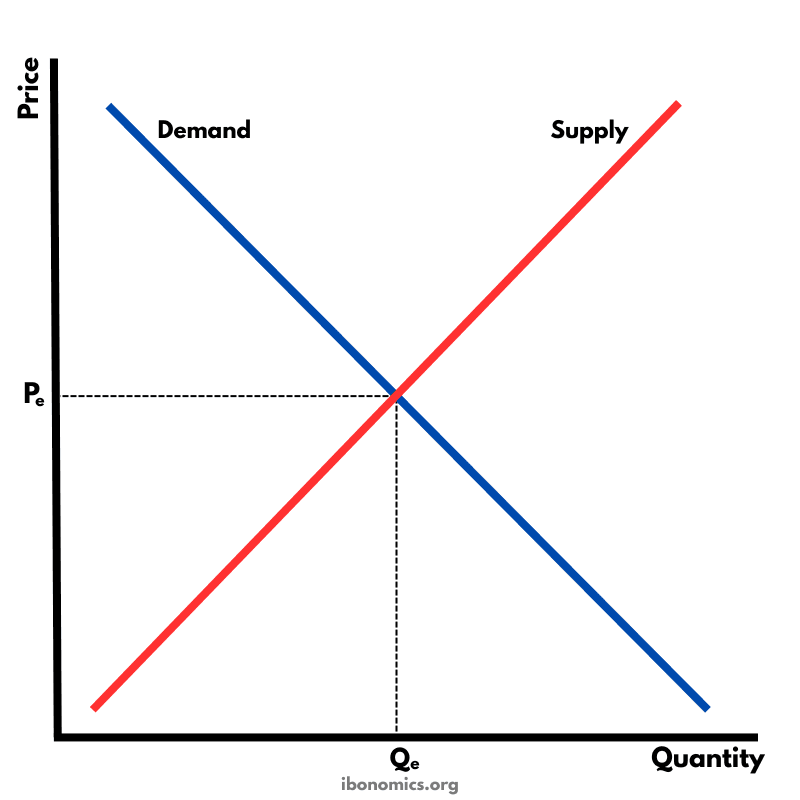
The fundamental diagram showing the relationship between demand and supply in a competitive market, determining equilibrium price and quantity.
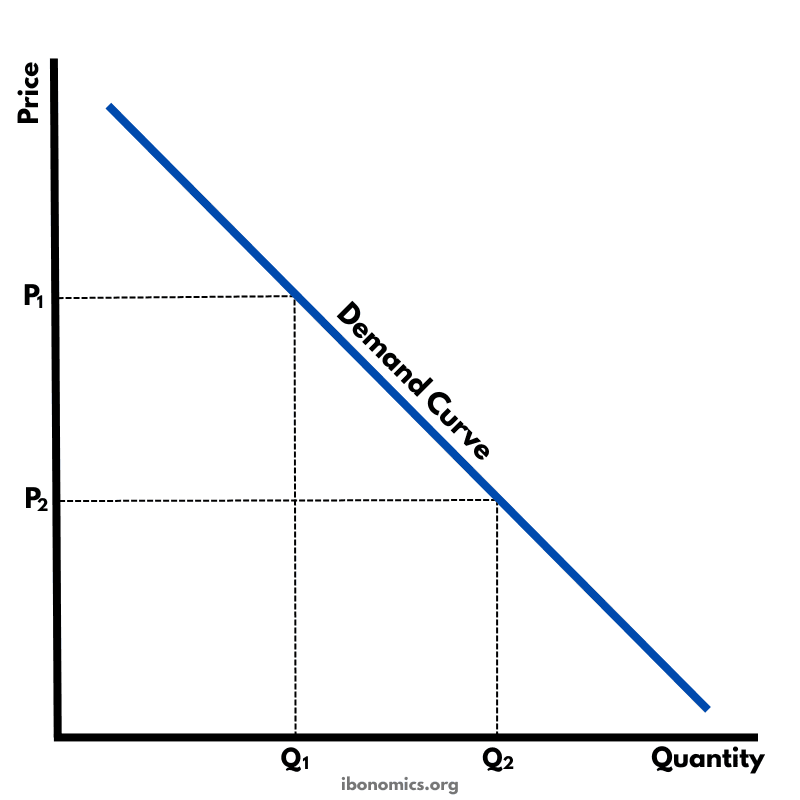
A basic diagram showing the inverse relationship between price and quantity demanded, illustrating the law of demand.
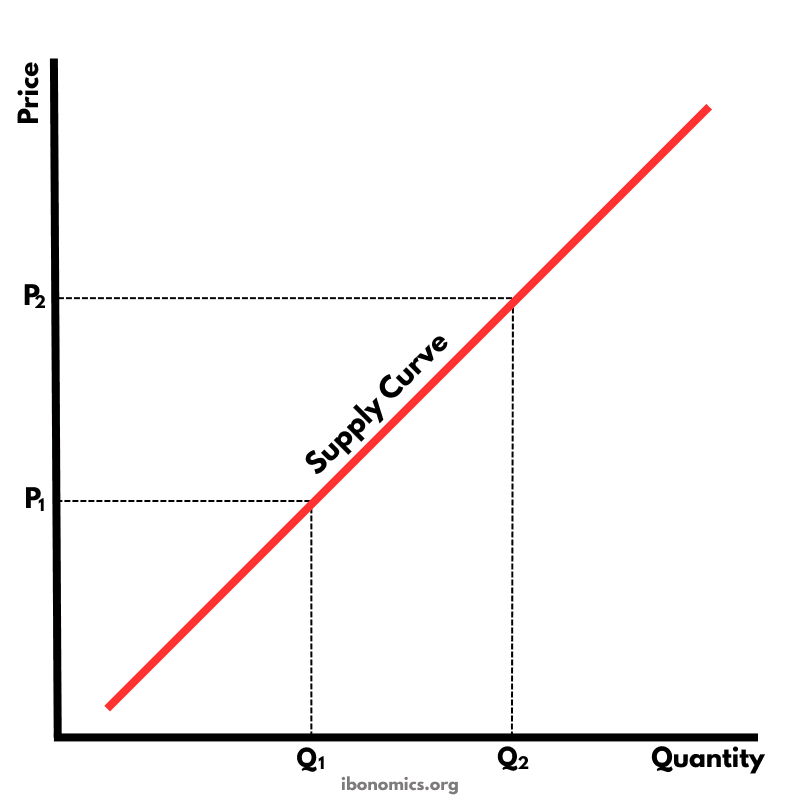
A basic diagram showing the positive relationship between price and quantity supplied, illustrating the law of supply.
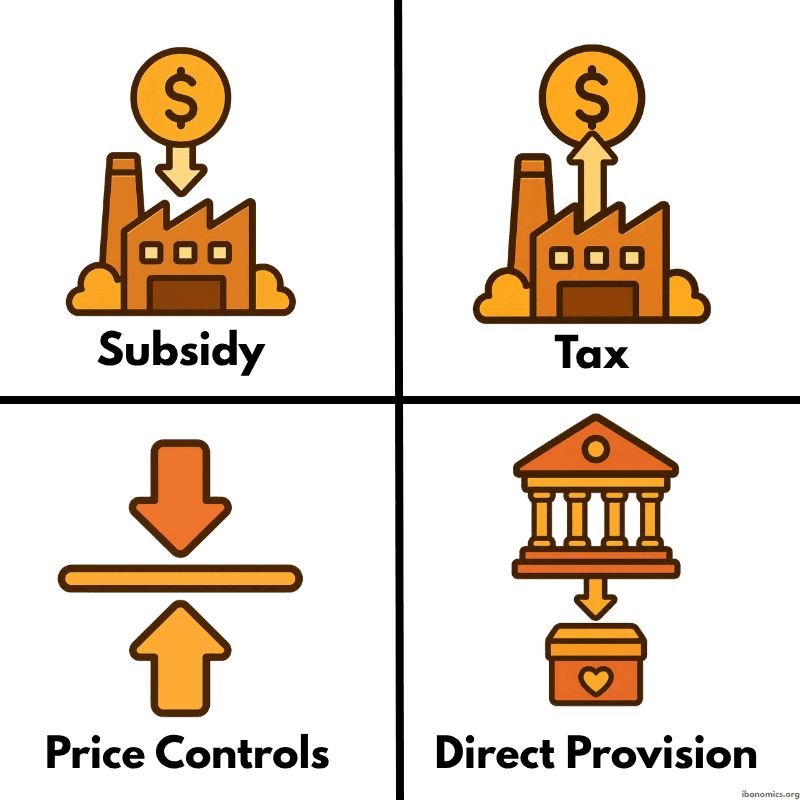
A simple diagram showing four common forms of government intervention in markets: subsidies, taxes, price controls, and direct provision.
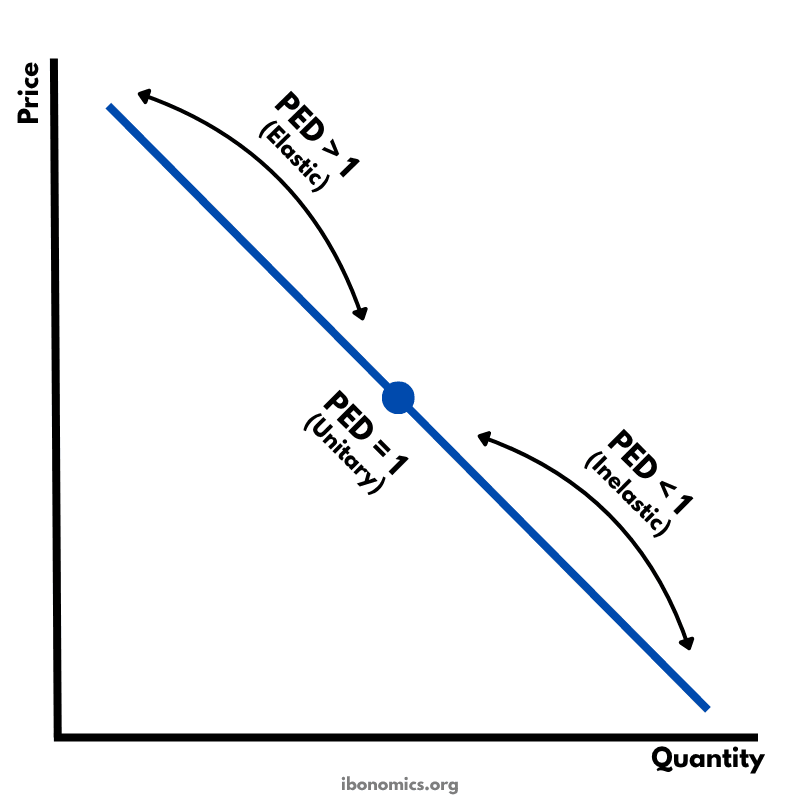
A diagram showing how price elasticity of demand changes along a straight-line demand curve, from elastic to unitary elastic to inelastic.
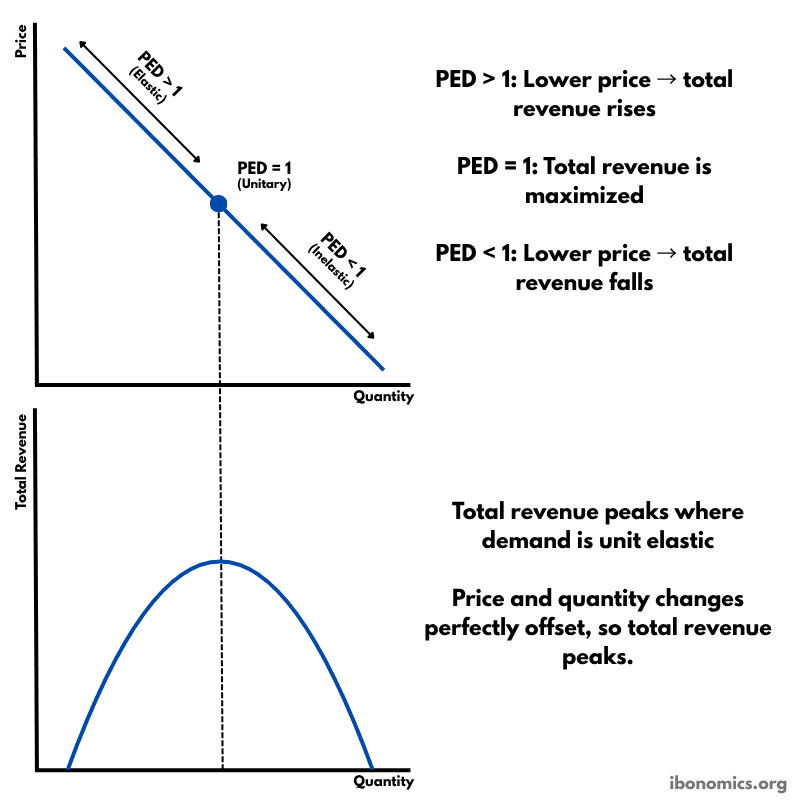
A diagram showing how price elasticity of demand affects total revenue, with total revenue maximized where demand is unitary elastic.