JetBlue–Spirit Merger: Government Action to Protect Competition
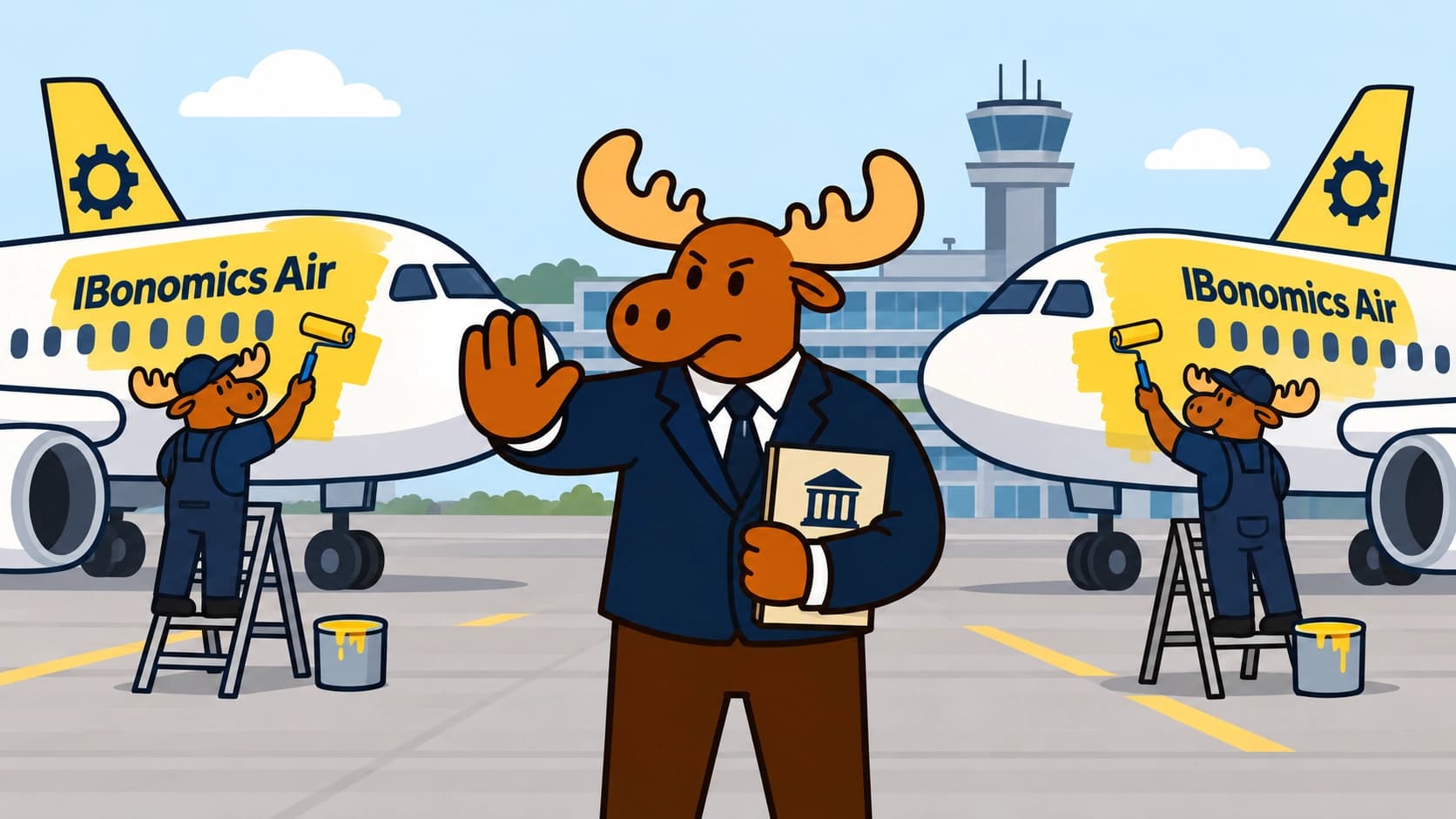
A US court blocked JetBlue's $3.8 billion takeover of Spirit, finding that the merger would reduce competition and harm many travellers.
Economic relevance
Regulation
Key figures
Proposed takeover
$3.8 billion
Value of JetBlue's proposed acquisition of Spirit Airlines.
Big Four market share
Close to 80%
The Department of Justice said American, Delta, United and Southwest controlled close to 80% of the US airline market when it challenged the deal.
Highly concentrated direct routes
40+
The DOJ identified more than 40 direct routes where JetBlue and Spirit's combined market shares were high enough for the deal to be considered presumptively anti-competitive.
Merger blocked
16 January 2024
A federal court ruled that the proposed acquisition would substantially lessen competition.
At a glance
- JetBlue agreed to buy Spirit Airlines for about $3.8 billion, which would have removed one important competitor from the US airline market.
- The US Department of Justice challenged the merger because it argued that losing Spirit would reduce competition, especially for price-sensitive travellers.
- In January 2024, a federal court blocked the merger after finding that it would substantially lessen competition.
- The case shows how governments can stop mergers when they believe higher market concentration will lead to higher prices or fewer choices.
- The main evaluation is that the merger might also have created a larger airline able to compete more strongly with the biggest US carriers.
Background
An oligopoly is a market dominated by a small number of large firms. The US airline industry has several large national airlines, so decisions by one airline can affect the others.
A merger reduces the number of independent firms when two businesses combine. This can sometimes create benefits, such as economies of scale and lower costs. However, it can also increase market concentration and reduce competition.
Spirit Airlines followed an ultra-low-cost business model. It offered basic fares and charged separately for optional services. The US government argued that Spirit's presence placed downward pressure on ticket prices because other airlines had to compete with its low fares.
JetBlue and Spirit announced their merger agreement in July 2022. JetBlue argued that combining the two airlines would create a larger competitor that could challenge the biggest US airlines more effectively.
What happened
In March 2023, the US Department of Justice and several states sued to block JetBlue's proposed $3.8 billion acquisition of Spirit Airlines.
The government argued that JetBlue and Spirit already competed directly on many routes and that removing Spirit as an independent airline would reduce competition. It said Spirit's low-cost model pushed other airlines to offer lower fares and more choices.
After a 17-day trial, the US District Court for the District of Massachusetts blocked the merger on 16 January 2024. The court found that the acquisition would substantially lessen competition in violation of Section 7 of the Clayton Act.
The court accepted that a larger JetBlue could put more competitive pressure on the biggest US airlines. However, it also found that consumers who relied on Spirit's very low fares would likely be harmed if Spirit disappeared as an independent competitor.
JetBlue and Spirit ended their merger agreement on 4 March 2024 after concluding that the legal and regulatory conditions needed to complete the deal were unlikely to be met.
Timeline
28 July 2022
JetBlue and Spirit announced an agreement for JetBlue to acquire Spirit.
7 March 2023
The US Department of Justice and several states sued to block the $3.8 billion acquisition.
October 2023
The federal court trial over the proposed merger began.
16 January 2024
The court blocked the merger after finding that it would substantially lessen competition.
4 March 2024
JetBlue and Spirit terminated their merger agreement.
Using this in the exam
Use this case in an answer about oligopoly, market concentration, mergers or competition policy.
Start by explaining that a merger reduces the number of independent firms in a market. If competition becomes weaker, firms may gain more market power and consumers may face higher prices, fewer choices or less innovation.
In this case, the government argued that Spirit was especially important because its low fares forced other airlines to compete more strongly. Removing Spirit could therefore reduce competitive pressure even for travellers who did not fly with Spirit.
The government responded through merger control. Instead of waiting for the merger to happen and trying to regulate the larger airline later, it challenged the deal before it was completed. The court then blocked it.
For evaluation, explain that mergers are not always harmful. JetBlue argued that the combined airline would be large enough to compete more effectively with the biggest US carriers. The court recognised this possible benefit, but judged that the loss of Spirit's low-cost competition would cause greater harm to many consumers.
Do not describe the case as collusion or a cartel. JetBlue and Spirit proposed becoming one company. The issue was whether the merger itself would reduce future competition.
Syllabus topics
Diagrams to use
Test yourself
Questions this example can answer
- Explain why mergers can increase market power in an oligopoly.
- Using a real-world example, evaluate government policies used to control market concentration.
- Discuss whether governments should prevent mergers between firms in oligopolistic markets.
Evaluation
Arguments in favour
Blocking the merger protected an independent low-cost competitor
Spirit's low fares placed pressure on other airlines to lower prices. Keeping Spirit independent preserved this source of competition, which could help consumers through lower fares and greater choice.
Merger control can prevent market power before it increases
Once two firms have merged, restoring competition can be difficult. Blocking an anti-competitive merger before it happens can therefore be simpler than regulating a more concentrated market later.
More independent firms can make a market more contestable
Keeping separate airlines in the market gives consumers more alternatives and forces firms to compete for passengers. This can limit the ability of any one airline to raise fares or reduce service.
Arguments against
The merger could have created a stronger rival to the largest airlines
The court recognised that a combined JetBlue and Spirit could have placed more competitive pressure on the biggest US carriers. A larger challenger might have increased competition at the national level.
Mergers can create economies of scale
Combining aircraft, staff, airport operations and technology may reduce average costs. If these savings are passed on to passengers, some consumers could benefit from lower prices or improved services.
Blocking a merger does not guarantee strong future competition
Competition is only protected if the independent firms remain able to compete effectively. If smaller airlines face high costs, limited aircraft or financial problems, preventing a merger may not by itself create a competitive market.
Context and assumptions
The effect of a merger can differ between routes
Airline competition is often local to particular routes. A merger may have little effect on one route but remove an important competitor on another, so regulators must examine where the firms actually compete.
Low-cost competitors can influence prices beyond their own customers
Spirit's importance was not only the passengers it carried. Its presence could cause rival airlines to lower their own fares, meaning consumers using other airlines could also benefit from Spirit remaining in the market.
Merger policy involves a trade-off
Governments must compare possible efficiency gains from a larger firm with the risk that reduced competition gives the merged business greater market power.
Key terms
- Oligopoly
- A market structure dominated by a small number of large firms whose decisions are interdependent.Taught in Unit 2.11: Market Failure: Market Power
- Merger
- The combination of two or more firms into one business.
- Market concentration
- The degree to which a small number of firms account for a large share of a market.Taught in Unit 2.11: Market Failure: Market Power
- Market power
- The ability of a firm to influence the price or other conditions in a market.Taught in Unit 2.11: Market Failure: Market Power
- Contestability
- The degree to which firms face actual or potential competition from other firms entering or expanding in a market.
- Competition policy
- Government policies designed to prevent anti-competitive behaviour and promote competition between firms.Taught in Unit 2.7: Role of Government in Microeconomics
- Economies of scale
- Reductions in average costs that occur when a firm increases its scale of production.
References
Sources
- 01
Justice Department Statements on District Court Decision to Block JetBlue's Acquisition of Spirit Airlines
U.S. Department of Justice
- 02
Justice Department Sues to Block JetBlue's Proposed Acquisition of Spirit
U.S. Department of Justice
- 03
Findings of Fact and Conclusions of Law: U.S. and Plaintiff States v. JetBlue Airways Corporation and Spirit Airlines, Inc.
U.S. District Court for the District of Massachusetts via U.S. Department of Justice
- 04
Justice Department Statements on JetBlue Terminating Acquisition of Spirit Airlines
U.S. Department of Justice
- 05
JetBlue Announces Termination of Merger Agreement with Spirit
JetBlue Airways
Related case studies
More microeconomics examples you can use in the same answer
A US court found Google illegally maintained search monopolies and imposed rules designed to make it easier for rivals to compete.

EU transparency rules require AI-generated audio to be detectable, aiming to reduce information gaps between creators and listeners.
EU regulators fined major carmakers €458 million for colluding on vehicle recycling, showing how governments can tackle cartel behaviour.