Price Controls
Role of Government in Microeconomics
Syllabus requirement
Price ceilings (maximum prices) and price floors (minimum prices), their purposes, and effects on markets.
Summary
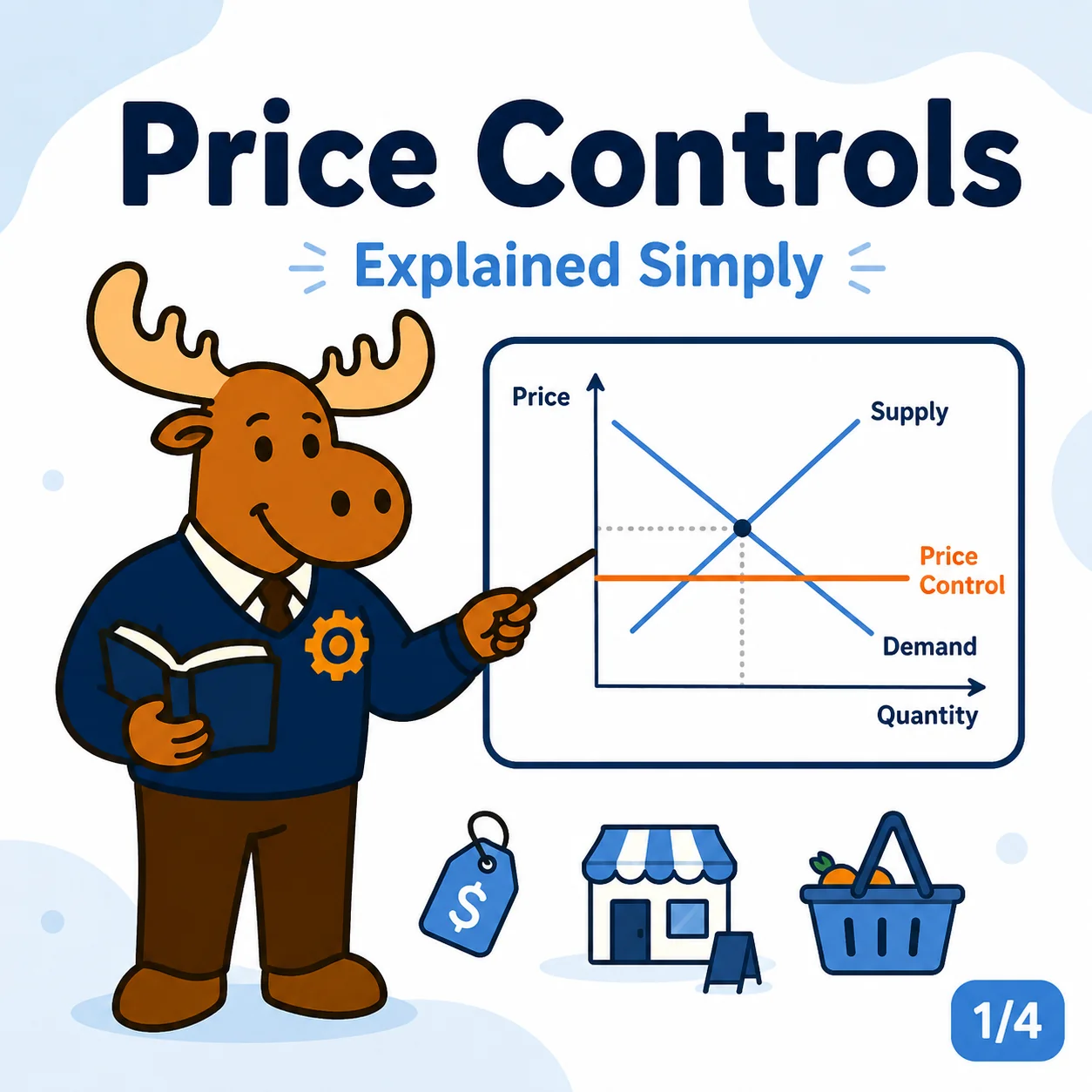
Price controls are government regulations that set legally enforced maximum (price ceilings) or minimum (price floors) prices for goods and services. Price ceilings are set below the market equilibrium to make goods more affordable but cause excess demand (shortages) and deadweight loss; price floors are set above equilibrium to protect producers but cause excess supply (surpluses), possible government purchases of surplus, and unemployment in labour markets when applied as a minimum wage. Diagrams of ceilings and floors should show changes in quantity exchanged, consumer and producer surplus, and the resulting inefficiencies.