IBonomics
Automatic Stabilisers on the Business Cycle – Smaller Swings in Real GDPHL
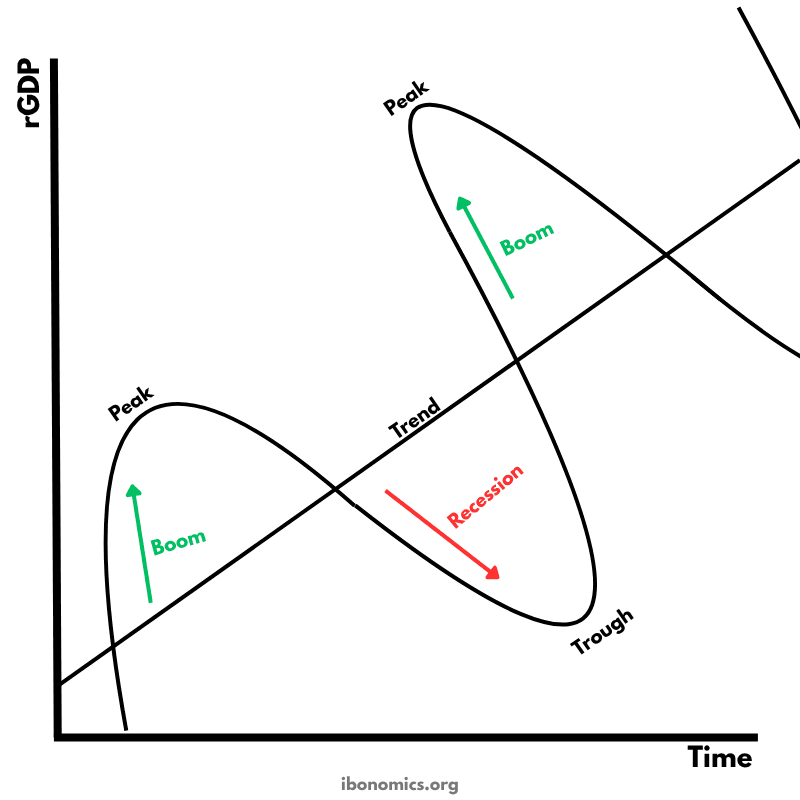
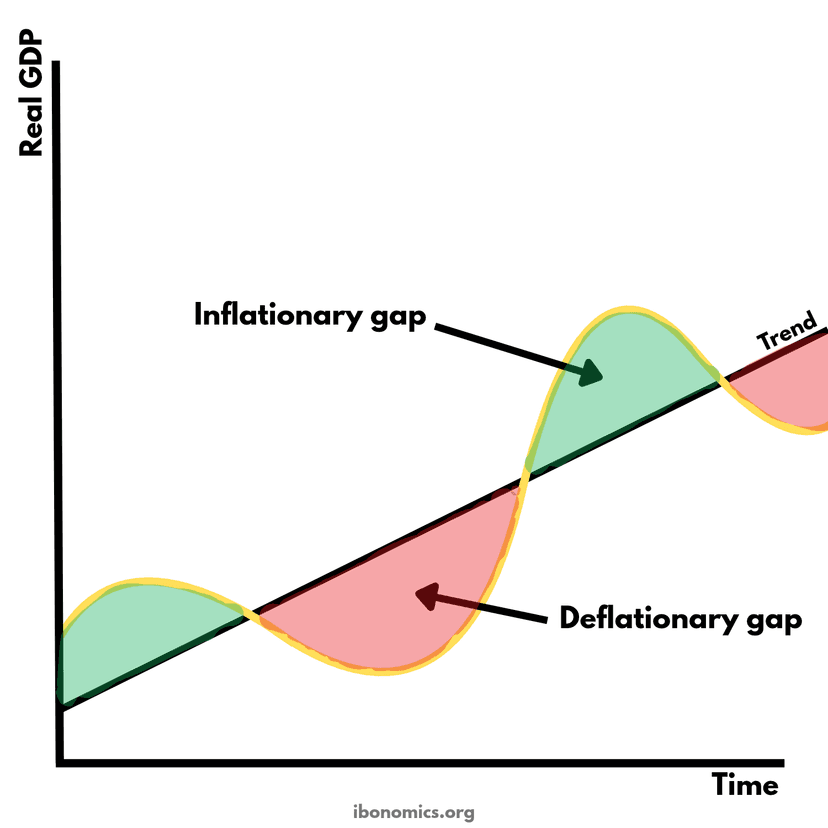
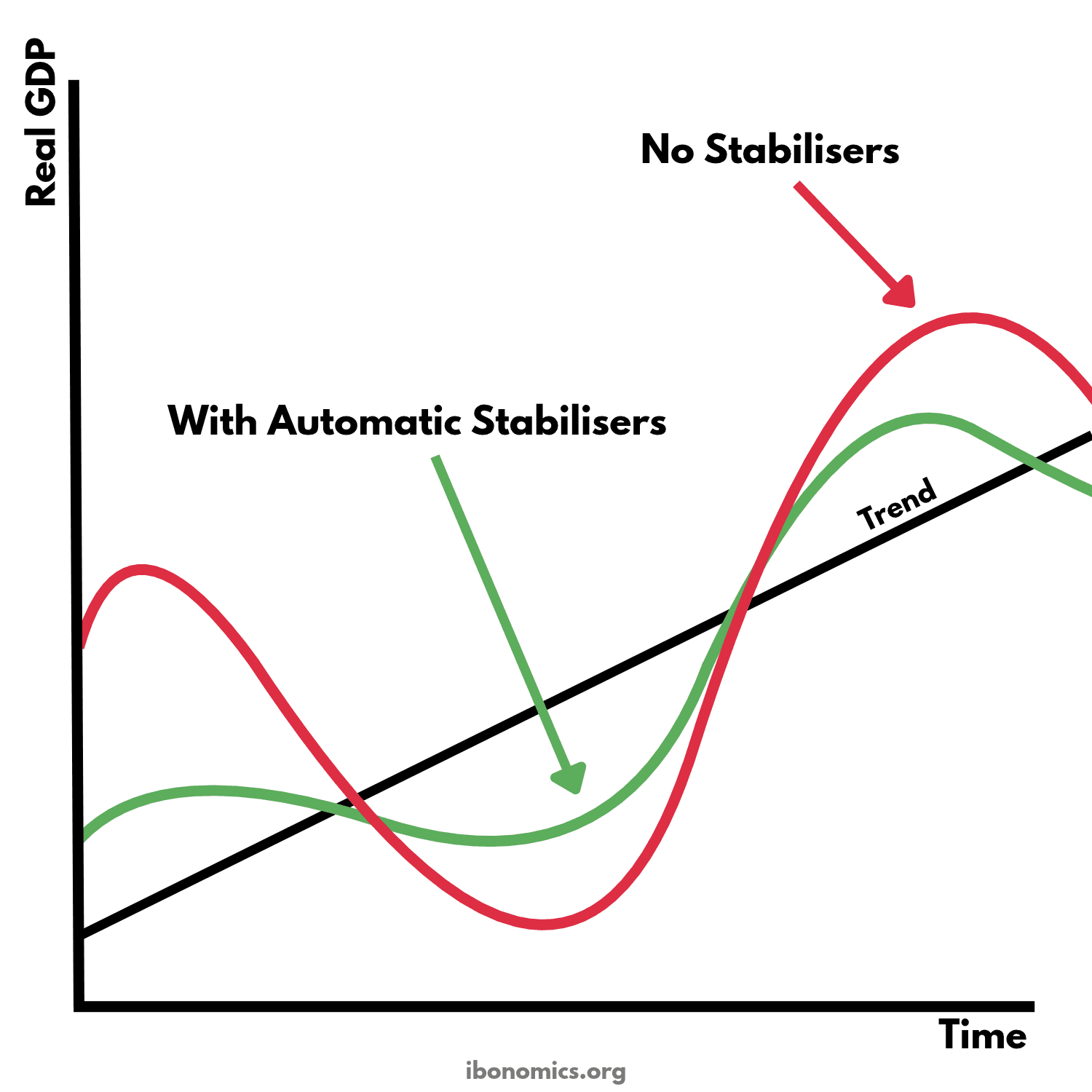
MacroeconomicsThis diagram compares the business cycle with and without automatic stabilisers. Real GDP follows the same long-term trend in both cases, but the swings around it are smaller when automatic stabilisers are in place.
Curves and elements
- With Automatic Stabilisers
- Real GDP when progressive taxes and unemployment benefits are in place. It stays closer to the trend.
- No Stabilisers
- Real GDP without them. Its booms and recessions are larger.
- Trend
- The long-term growth path of the economy's potential output.
Key explanations
- 1
Automatic stabilisers are progressive taxes and unemployment benefits. They change without any new policy decision as real GDP rises and falls.
- 2
In a recession, incomes fall and tax revenue falls by more than proportionally, while more people claim unemployment benefits. Households keep more disposable income than they otherwise would, so aggregate demand falls by less and the trough is shallower.
- 3
In a boom, incomes rise and tax revenue rises by more than proportionally, while fewer people claim unemployment benefits. This slows the growth of disposable income and aggregate demand, so the peak is lower.
- 4
Automatic stabilisers make the swings smaller, but they do not remove the cycle or change the long-term trend. The peaks and troughs come at about the same times with or without them.
- 5
Because they work automatically, they avoid the delays of discretionary fiscal policy, which has to be decided and then put in place.
Example exam question
Using a business cycle diagram, explain how automatic stabilisers reduce fluctuations in real GDP.
Show example answer
Automatic stabilisers are progressive taxes and unemployment benefits. In a recession, incomes fall, so tax revenue falls by more than proportionally and spending on unemployment benefits rises. This supports disposable income and aggregate demand, so real GDP falls by less than it would without stabilisers. In a boom the opposite happens. Tax revenue rises by more than proportionally and spending on unemployment benefits falls, which slows the growth of aggregate demand, so real GDP rises by less. In the diagram, the curve with automatic stabilisers therefore stays closer to the trend than the curve without them, although both follow the same trend.