 IBonomics
EU Plastic-Waste Export Ban: A Negative Production Externality
The EU banned plastic-waste exports to non-OECD countries to reduce pollution risks and the external costs of poorly managed waste.
Key figures
Export ban begins
21 Nov 2026
The EU prohibited exports of plastic waste to non-OECD countries from this date.
Annual EU plastic waste
≈40 million tonnes
Approximate amount of plastic waste generated in the EU each year.
EU plastic-waste exports
1.4 million tonnes
Total plastic waste exported by the EU to destinations outside the EU in 2025.
Exports to non-OECD countries
Around 50%
Approximate share of EU plastic-waste exports sent to non-OECD countries in 2025.
At a glance
- Poorly managed plastic waste can impose pollution and health costs on people who are not involved in producing or treating the waste.
- In 2025, the EU exported approximately 1.4 million tonnes of plastic waste, with around half going to non-OECD countries.
- From 21 November 2026, the EU banned exports of all plastic waste to non-OECD countries under its revised Waste Shipment Regulation.
- The ban aims to prevent environmental costs from being shifted to countries where waste may not be managed safely.
- The regulation may reduce harmful waste exports, but its effectiveness depends on enforcement and whether waste is managed more safely elsewhere.
Background
The production and use of plastic products generate waste that must eventually be collected, recycled or disposed of. Some European plastic waste has historically been exported to countries outside the EU for treatment.
When waste-treatment firms dispose of plastic unsafely, pollution can affect nearby communities, waterways and ecosystems. These costs may not be fully paid by the firms responsible.
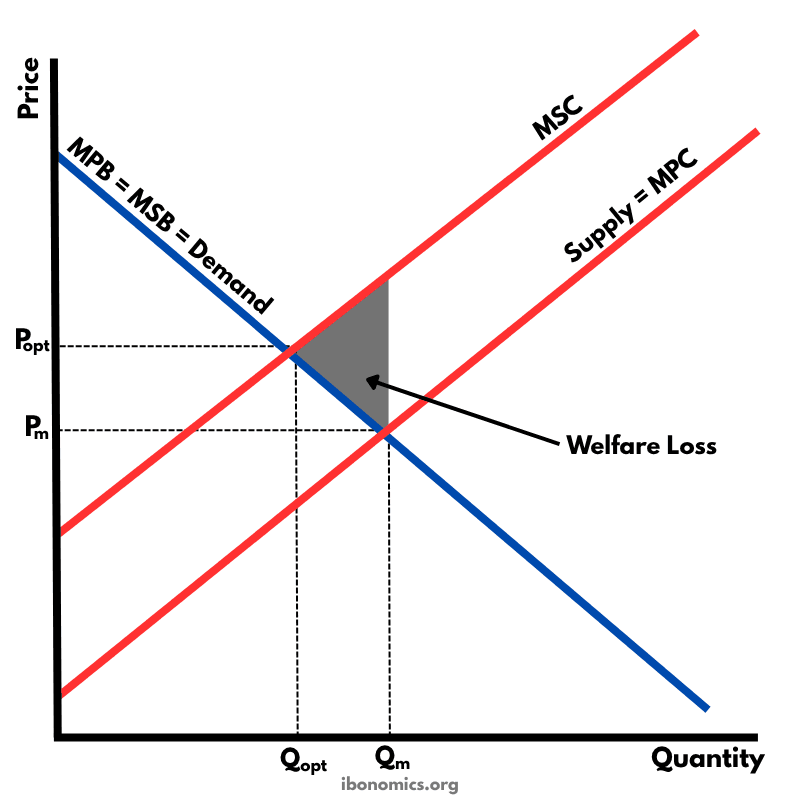
This is a negative production externality of waste treatment. The marginal social cost (MSC) includes both the firm's private costs and the external costs imposed on third parties. Therefore, MSC is greater than marginal private cost (MPC).
Where these external costs are ignored, the market may provide more low-cost, polluting waste-treatment services than is socially optimal, creating a welfare loss.
What happened
On 21 November 2026, the European Union introduced a ban on exporting plastic waste to countries outside the Organisation for Economic Co-operation and Development (OECD). The measure forms part of Regulation (EU) 2024/1157, the revised Waste Shipment Regulation.
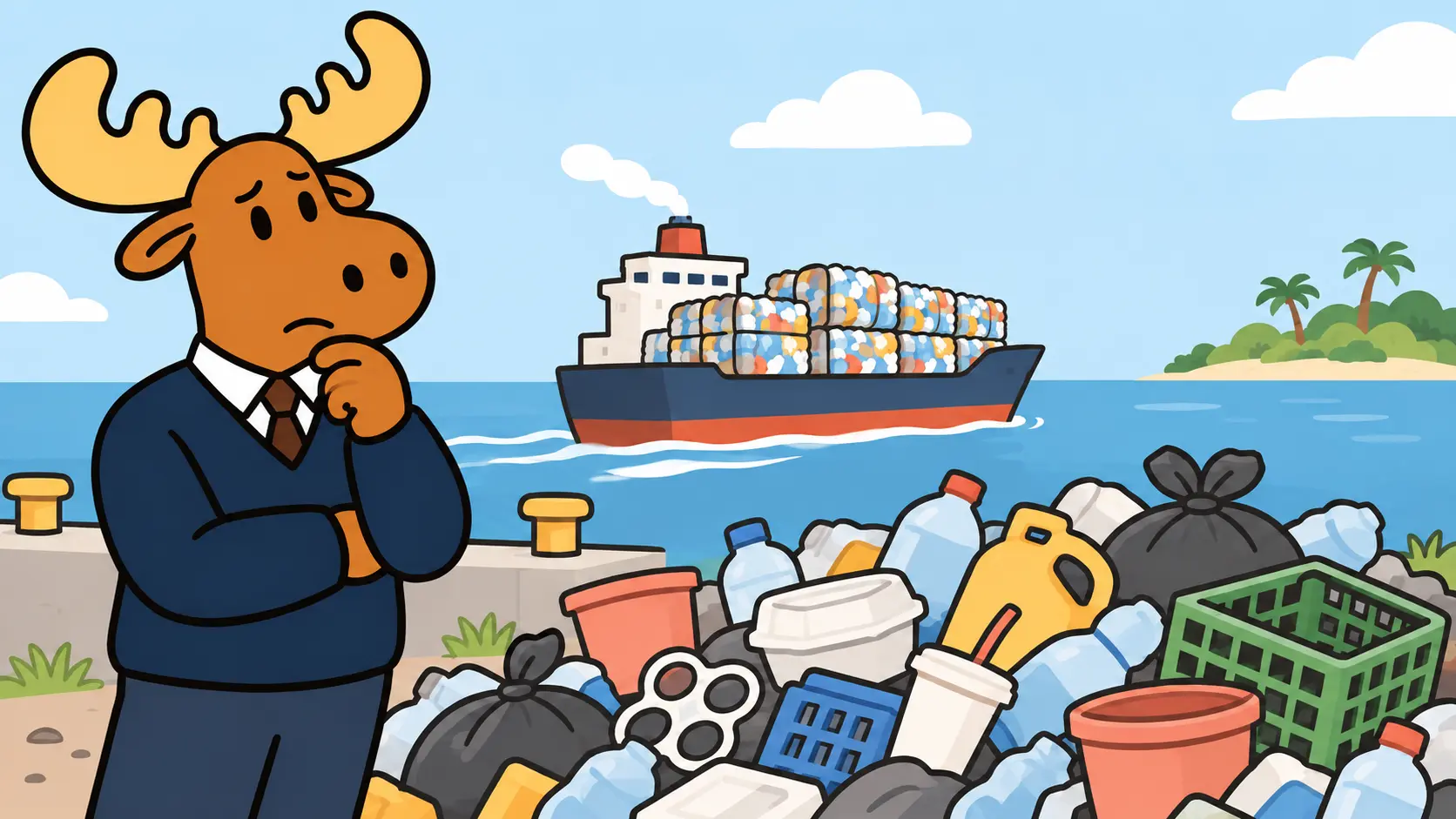
The EU generates around 40 million tonnes of plastic waste annually. In 2025, it exported approximately 1.4 million tonnes, with around half going to non-OECD countries. Major destinations included Malaysia, which received 276,000 tonnes, Indonesia with 215,000 tonnes, and Vietnam with 137,000 tonnes.
The European Commission introduced the restriction because plastic waste exported abroad can cause environmental and health problems when it is not managed safely. Examples include dumping, open burning and plastic pollution entering waterways.
The ban means EU waste operators can no longer send plastic waste directly to non-OECD countries. They must instead use permitted treatment or recycling options, including facilities within the EU or approved routes to OECD countries.
The restriction applies until at least 21 May 2029. After that date, non-OECD countries may apply to receive certain non-hazardous plastic waste if they can demonstrate environmentally sound waste-management standards.
The policy is an example of government regulation intended to reduce the environmental costs associated with poorly managed plastic waste.
Timeline
11 April 2024
The EU adopted Regulation (EU) 2024/1157, introducing stronger controls on waste shipments.
21 May 2026
New notification and consent requirements began applying to plastic-waste exports.
21 November 2026
The EU ban on plastic-waste exports to non-OECD countries took effect.
21 May 2029
Earliest date from which non-OECD countries may apply to receive eligible EU plastic waste under strict conditions.
Using this in the exam
Use this case in a Paper 1 answer about negative production externalities or government regulation to reduce market failure.
First, explain that poorly managed plastic-waste treatment can impose pollution costs on third parties. In a negative production externality diagram, draw MSC above MPC. The free-market quantity of polluting treatment is greater than the socially optimal quantity, creating a welfare loss.
Next, introduce the EU's November 2026 export ban. Regulation prevents EU waste operators from using treatment routes in non-OECD countries, where the EU has identified risks of environmentally harmful waste management. This aims to reduce the external costs imposed on communities abroad.
For evaluation, explain that the ban may reduce harmful exports but does not eliminate plastic waste itself. Its success depends on whether alternative treatment is environmentally sound and whether the rules are effectively enforced.
Do not describe the export ban as a Pigouvian tax or claim it automatically shifts MPC up to MSC. It is a restriction on where waste can be exported. The negative externality diagram illustrates the underlying market failure, not a guaranteed movement to the socially optimal quantity.
Syllabus topics

Questions this example can answer
- Explain how a negative externality of production can cause market failure.
- Using a real-world example, evaluate government regulation as a method of reducing negative production externalities.
- Discuss whether government regulation is effective in reducing the environmental costs of production.
Evaluation
Arguments in favour
The ban can reduce the transfer of pollution costs abroad
By prohibiting plastic-waste exports to non-OECD countries, the EU removes a route through which its waste could be sent to facilities with inadequate environmental controls. This may reduce pollution and health costs imposed on communities in importing countries.
The regulation encourages greater responsibility for waste
EU waste operators must find permitted alternatives to previously available export routes. If environmentally sound treatment costs more, firms have an incentive to improve sorting, recycling or waste reduction, potentially reducing future environmental damage.
Arguments against
The ban does not directly reduce plastic production
Restricting exports changes where waste may be treated, but it does not directly limit how much plastic firms produce or consumers use. The original external costs of plastic production and disposal may therefore remain.
Waste may be redirected rather than reduced
EU operators can still export plastic waste to OECD countries under stricter controls. If alternative facilities also manage waste poorly, pollution may simply move elsewhere. Greater demand for treatment within the EU could also raise costs if suitable capacity is limited.
Context and assumptions
Effectiveness depends on enforcement
Customs checks, waste classification and monitoring are needed to prevent prohibited shipments or waste being redirected illegally. Weak enforcement could substantially reduce the regulation's environmental benefits.
The environmental impact depends on the alternative treatment
If previously exported waste is recycled safely, the external costs may fall. If it is instead sent to poorly managed facilities, landfills or incinerators, the improvement could be smaller. OECD membership alone does not guarantee environmentally sound treatment.
Key terms
- Negative production externality
- An external cost imposed on third parties as a result of the production of a good or service, causing marginal social cost to exceed marginal private cost.Taught in Unit 2.8: Market Failure: Externalities and Common Pool Resources
- Marginal private cost (MPC)
- The additional cost incurred by a producer from producing one more unit of a good or service.
- Market failure
- A situation where the free market fails to allocate resources efficiently.
- Welfare loss
- The loss of total economic welfare when resources are not allocated at the socially optimal level.
- Regulation
- Rules imposed by the government to influence the behaviour of consumers or firms.Taught in Unit 2.7: Role of Government in Microeconomics
Sources
Related case studies
More microeconomics examples you can use in the same answer
A US court found Google illegally maintained search monopolies and imposed rules designed to make it easier for rivals to compete.

EU transparency rules require AI-generated audio to be detectable, aiming to reduce information gaps between creators and listeners.
A US court blocked JetBlue's $3.8 billion takeover of Spirit, finding that the merger would reduce competition and harm many travellers.