 IBonomics
Searah: How a Gas Joint Venture Can Achieve Economies of Scale
PETRONAS and Eni combined gas operations in Searah to share infrastructure and expertise, showing how greater scale may reduce production costs.
Key figures
Assets combined
19
Searah brought together 14 gas-producing and development assets in Indonesia and five in Malaysia.
Planned investment
US$20 billion
Expected investment programme over five years, rather than expenditure already completed.
Production in October 2026
≈350,000 boe/day
Reported daily oil and gas output using barrels of oil equivalent, a common unit for comparing energy production.
Maha infrastructure link
≈12 km
New subsea pipelines connect the Maha field to the existing Jangkrik floating processing facility in Indonesia.
At a glance
- In June 2026, PETRONAS and Eni created Searah, a jointly owned energy company combining 19 gas assets in Malaysia and Indonesia.
- The companies aim to lower operating costs by sharing equipment, technology, specialist teams and support services.
- Searah’s Maha gas field provides a practical example: its new wells connect to an existing offshore processing facility, allowing infrastructure to be shared.
- These arrangements illustrate potential economies of scale, when average production cost falls as a firm expands its operations.
- The benefits depend on successful coordination: managing several costly projects at once can also create delays and higher costs.
Background
Producing natural gas offshore requires costly equipment, such as wells, pipelines and processing facilities. A firm must pay for much of this infrastructure before it can sell any gas. These fixed costs do not change directly with each additional unit produced.
Economies of scale occur when a firm’s average cost per unit falls as the scale of production increases. For example, several gas fields may be able to share processing equipment, engineering teams or transport links instead of paying for separate facilities. The fixed costs can then be spread across more output.
However, a larger business is not automatically cheaper to run. The savings depend on how effectively its operations are combined.
What happened
On 8 June 2026, Malaysia’s PETRONAS and Italy’s Eni announced Searah, a 50:50 joint venture. A joint venture is a business owned together by two or more companies. Searah combined 19 existing gas-producing and development assets, with 14 in Indonesia and five in Malaysia.
The partners said they would combine expertise and share activities such as logistics and technology. They also announced plans for around US$20 billion of investment over five years. This is a proposed investment programme, not money already spent.
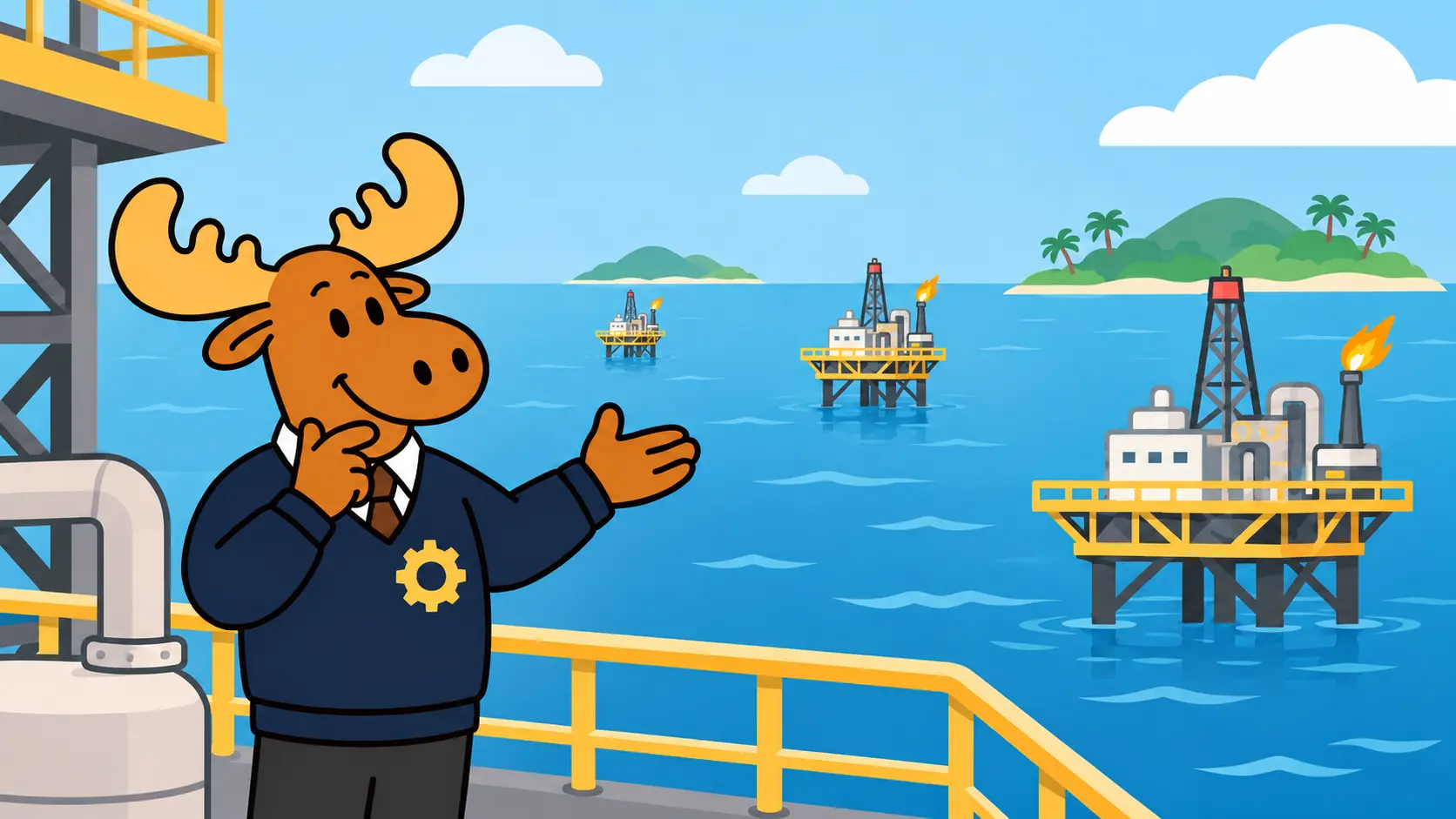
A concrete example of shared infrastructure is the Maha gas field off Indonesia, which started producing in October 2026. Its two underwater wells connect through about 12 kilometres of pipelines to the existing Jangkrik floating processing facility. Using an existing facility can avoid some of the cost of building a new one. This shows how several fields can use one expensive facility instead of each needing its own.
Eni reported that Searah was producing approximately 350,000 barrels of oil equivalent per day in October 2026. The company aims to exceed 500,000 per day by 2028. More output could help spread fixed costs further, but whether average costs actually fall will depend on how efficiently the projects are completed.
Timeline
3 November 2025
PETRONAS and Eni signed an agreement to combine selected gas assets.
8 June 2026
The companies formally established Searah as an equally owned joint venture covering 19 assets.
20 July 2026
Wood Mackenzie highlighted the opportunity for growth but warned about the difficulty of coordinating several expensive developments.
30 October 2026
Searah’s Maha field began production using the existing Jangkrik processing facility in Indonesia.
Using this in the exam
Use Searah in a Paper 1 answer about economies of scale or the advantages and disadvantages of large firms.
Start by defining economies of scale: a reduction in long-run average cost as a firm increases its scale of production. In June 2026, PETRONAS and Eni combined 19 gas assets into Searah. Shared equipment and specialist services may reduce duplication, spreading costs over more output.
For a specific example, mention that the Maha field began production using the existing Jangkrik processing facility in October 2026. This shows how sharing expensive infrastructure can reduce the need to build separate facilities. This illustrates technical economies of scale from using shared equipment.
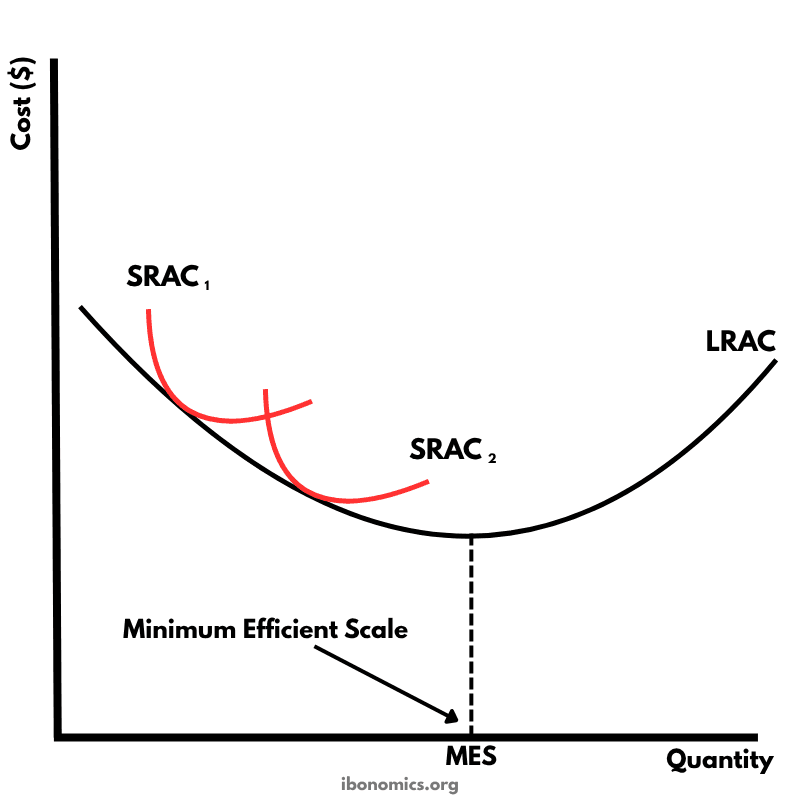
Draw a long-run average cost (LRAC) curve. Show output increasing along its downward-sloping section, where the average cost per unit falls. Do not draw a market supply shift: this diagram explains costs for a firm, not the whole market price.
For evaluation, explain that savings are not guaranteed. Managing projects in two countries can raise coordination costs, and construction delays may increase spending. If a firm grows beyond the scale it can manage efficiently, diseconomies of scale may cause average costs to rise. Searah is a real example of firms seeking economies of scale, not evidence that a particular cost reduction has already been measured.
Diagrams to use
Questions this example can answer
- Explain how economies of scale can affect the average costs of a firm.
- Using a real-world example, discuss the advantages and disadvantages of increasing a firm’s scale of production.
- Using real-world examples, evaluate the view that larger firms are more efficient than smaller firms.
Evaluation
Arguments in favour
Shared facilities can reduce duplicated costs
Maha uses pipelines to send gas to the existing Jangkrik processing facility. Using shared infrastructure across fields can save on separate equipment and spread its cost over a larger volume of gas.
Combining knowledge and finance can support large projects
PETRONAS and Eni bring technical teams and experience from different projects. Searah’s planned US$20 billion investment programme may be easier to coordinate and finance through a joint operation, helping it develop new fields.
Arguments against
Managing a larger operation can increase costs
Searah oversees projects in Malaysia and Indonesia. Coordination across different teams, suppliers and national rules can create delays or extra management costs, reducing the expected savings.
Costly projects may not produce the expected output
Wood Mackenzie warned about delivering several large offshore developments at once without delays or cost overruns. If spending increases while output falls short of targets, average cost per unit may remain high.
Context and assumptions
Shared ownership and greater production are not the same thing
The 19 assets already existed before Searah was formed, and the Maha-to-Jangkrik connection was planned before the venture. These examples show opportunities to share resources, not that the joint venture itself created every saving.
The LRAC diagram shows a possible outcome, not a measured result
The companies have described expected efficiencies, but published figures do not establish how much Searah’s average costs have fallen. The actual outcome will depend on integration, project performance and production levels.
Key terms
- Economies of scale
- A fall in long-run average cost as a firm increases the scale of its production.Taught in Unit 2.11: Market Failure: Market Power
- Long-run average cost (LRAC)
- The cost per unit of output when a firm has enough time to change all of its factors of production.
- Fixed costs
- Costs that do not vary with the level of output in the short run, such as the cost of maintaining production facilities.
- Diseconomies of scale
- An increase in long-run average cost when a firm grows beyond the scale it can manage efficiently.Taught in Unit 2.11: Market Failure: Market Power
- Joint venture
- A business owned jointly by two or more companies, usually formed to combine resources or carry out shared activities.
Sources
- 01
PETRONAS and Eni Establish Searah to Strengthen Regional Energy Security and Deliver Long-Term Value
PETRONAS
- 02
Eni and PETRONAS officially establish Searah
Eni
- 03
Eni announces start-up of gas production from the Maha field offshore Indonesia
Eni
- 04
Eni and PETRONAS' Searah JV will reshape Southeast Asia's upstream landscape
Wood Mackenzie
Related case studies
More microeconomics examples you can use in the same answer

South Africa taxes vaping liquid to discourage consumption and raise revenue, illustrating how indirect taxes can address market failure.

EU countries use renewable-energy support schemes and auctions to encourage investment, increase clean-energy output and support climate goals.

A US court found Google illegally maintained search monopolies and imposed rules designed to make it easier for rivals to compete.