IBonomics
Inflationary Gap – Above Full Employment Equilibrium
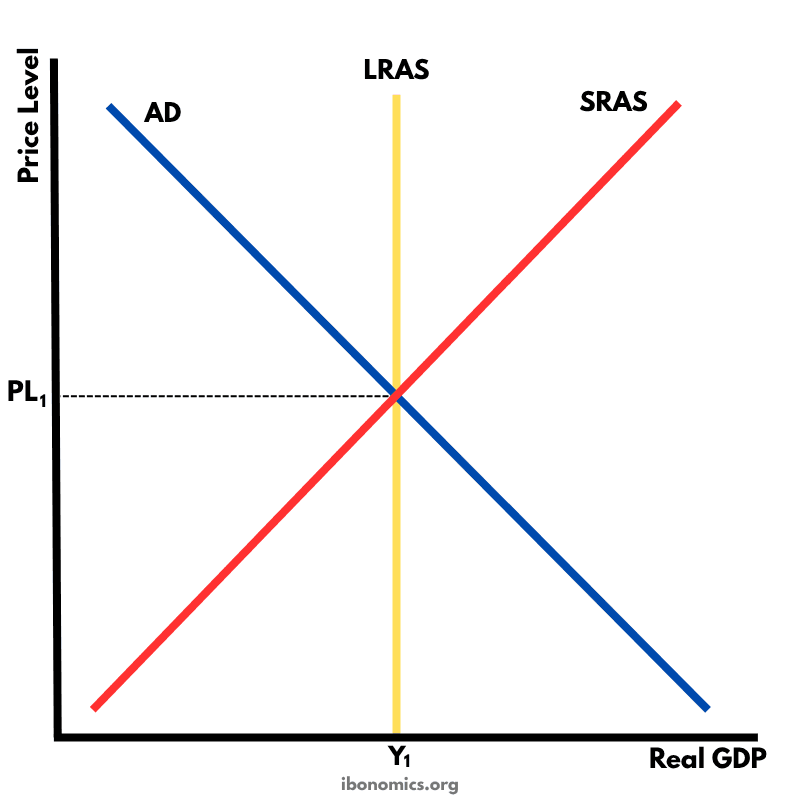
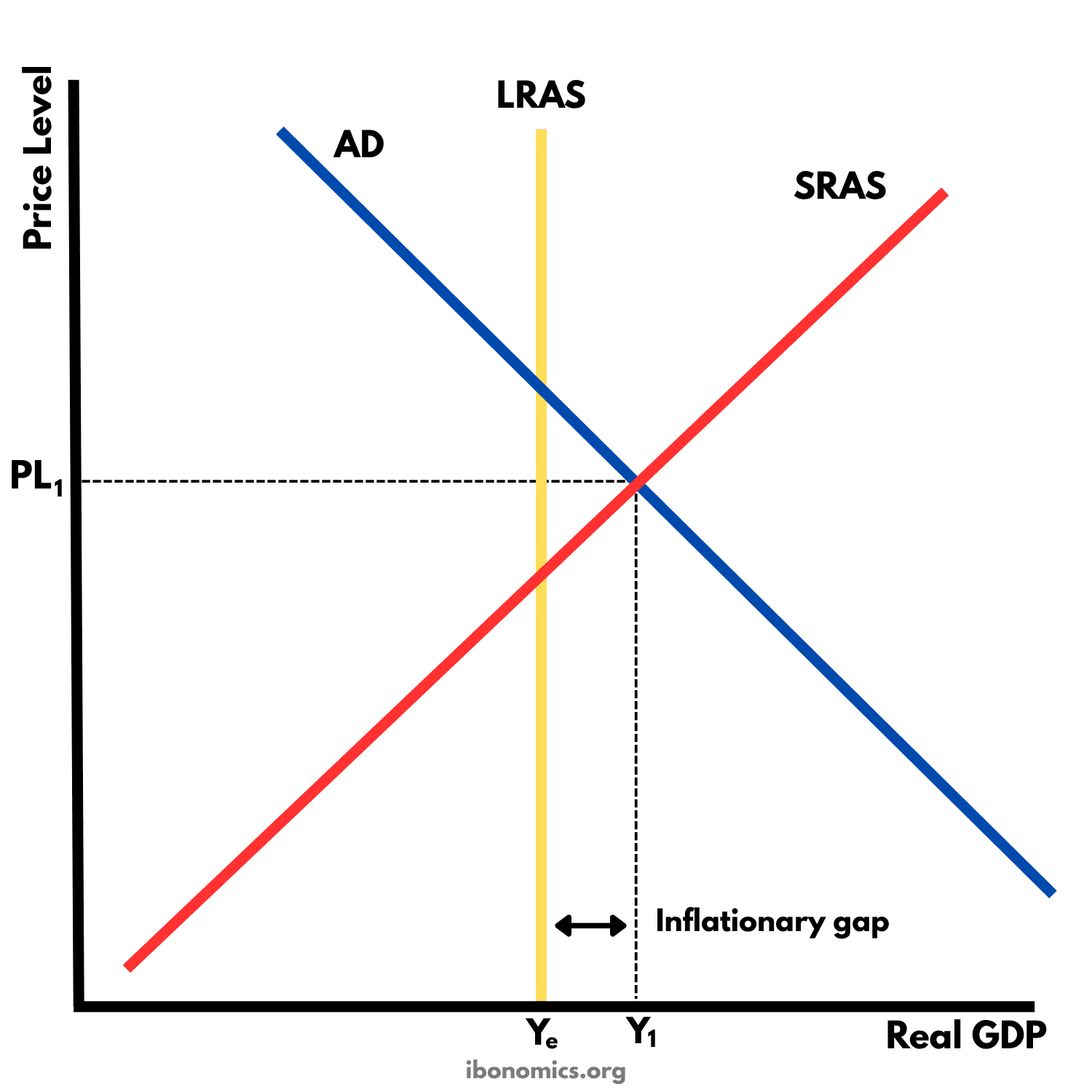
A diagram showing an inflationary gap, where aggregate demand is high enough that the economy produces beyond its full employment level of output (Ye). Real GDP at Y1 is above potential output, so resources are overused and the price level is pushed up.
Curves and elements
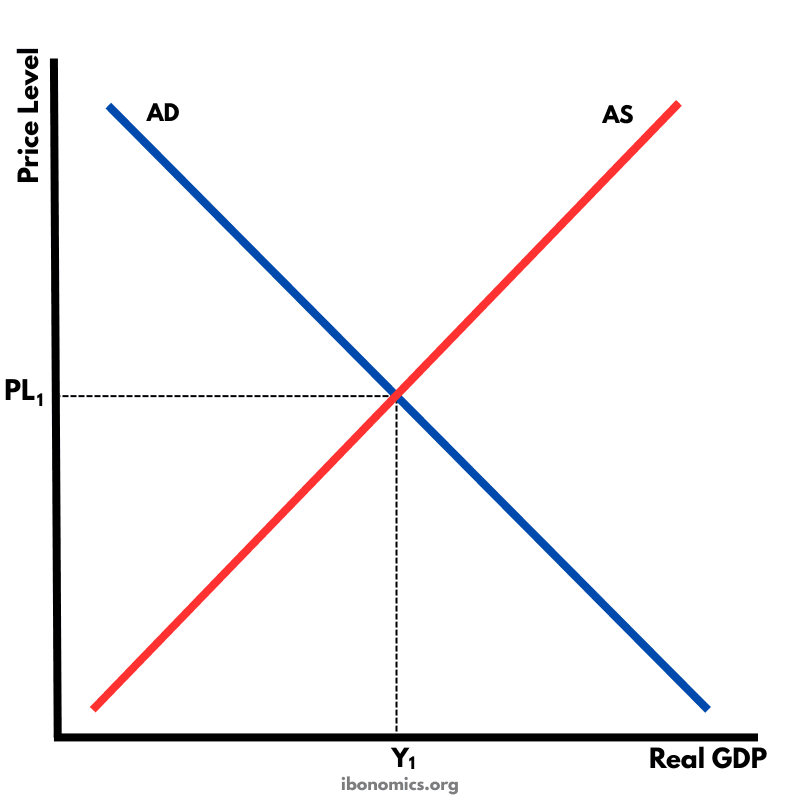
- AD
- Aggregate demand, the total spending on the economy's goods and services at each price level.
- SRAS
- Short-run aggregate supply. In the short run, firms increase output as the price level rises.
- LRAS
- Long-run aggregate supply, vertical at the full employment level of output Ye.
- PL1
- The price level where AD meets SRAS.
- Y1
- Real GDP where AD meets SRAS, beyond full employment.
- Ye
- The full employment level of output, where LRAS stands.
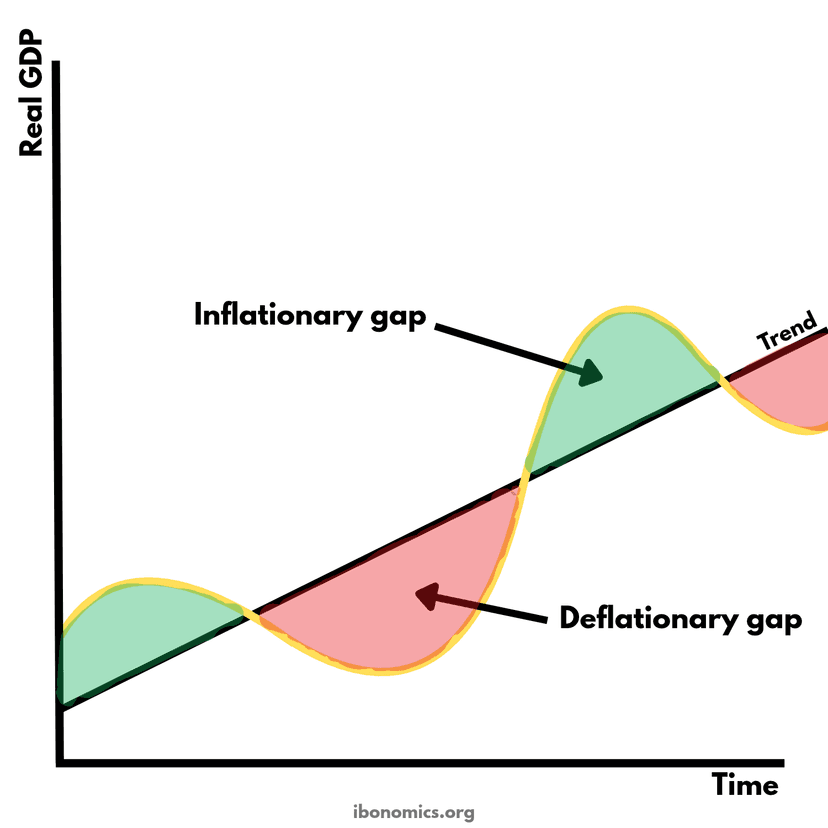
- Inflationary gap
- The difference between Y1 and Ye, the amount by which real GDP exceeds the full employment level.
Key explanations
- 1
The AD curve meets the SRAS curve at Y1, which is greater than the full employment level of output Ye.
- 2
The vertical LRAS curve shows the full employment level of output, the most the economy can produce in the long run with its resources fully employed.
- 3
At Y1, the economy is producing more than it can sustain. Firms run machinery for longer and pay overtime, and unemployment falls below its natural rate, so costs and the price level rise.
- 4
The difference between Y1 and Ye is the inflationary gap, which shows that the economy is overheating.
- 5
The government may use contractionary fiscal or monetary policy to shift AD left and close the gap. In the new classical view, the gap also closes on its own in the long run, as higher wages shift SRAS to the left.
Example exam question
Using an AD/AS diagram, explain what is meant by an inflationary gap and how it affects the price level.
Show example answer
In the diagram, AD meets SRAS at Y1, which is beyond the full employment level of output Ye shown by the vertical LRAS curve. The difference between Y1 and Ye is an inflationary gap. Because the economy is producing more than its sustainable capacity, firms compete for scarce labour and resources, so wages and other costs rise and the price level is pushed up to PL1. Unemployment falls below its natural rate. To close the gap, the government could cut its spending or raise taxes, or the central bank could raise interest rates, shifting AD to the left towards Ye.