 IBonomics
AI Music and the Background-Music Market: Supply, Elasticity and Creative Work
Generative AI has expanded the supply of background music, changing market pressures and opportunities for composers and producers.

Key figures
AI-generated uploads
≈90,000 per day
Deezer reported nearly 90,000 fully AI-generated tracks per day, exceeding 50% of new daily uploads at peak in June 2026.
Share of Deezer listening
1–3%
Despite their large share of uploads, fully AI-generated tracks accounted for only 1–3% of streams on Deezer.
AI share of music-library revenue
≈60% by 2028
CISAC/PMP Strategy projected that generative AI music could account for around 60% of music-library revenues by 2028.
Creator revenue at risk
24% by 2028
CISAC/PMP Strategy projected 24% of music creators' revenues could be at risk under unchanged conditions. This is a forecast, not an observed job-loss figure.
At a glance
- Generative AI lowers the time and skill needed to create simple background tracks, shifting the market supply of music to the right.
- Deezer received about 90,000 fully AI-generated tracks per day at peak in June 2026, when they exceeded 50% of new daily uploads.
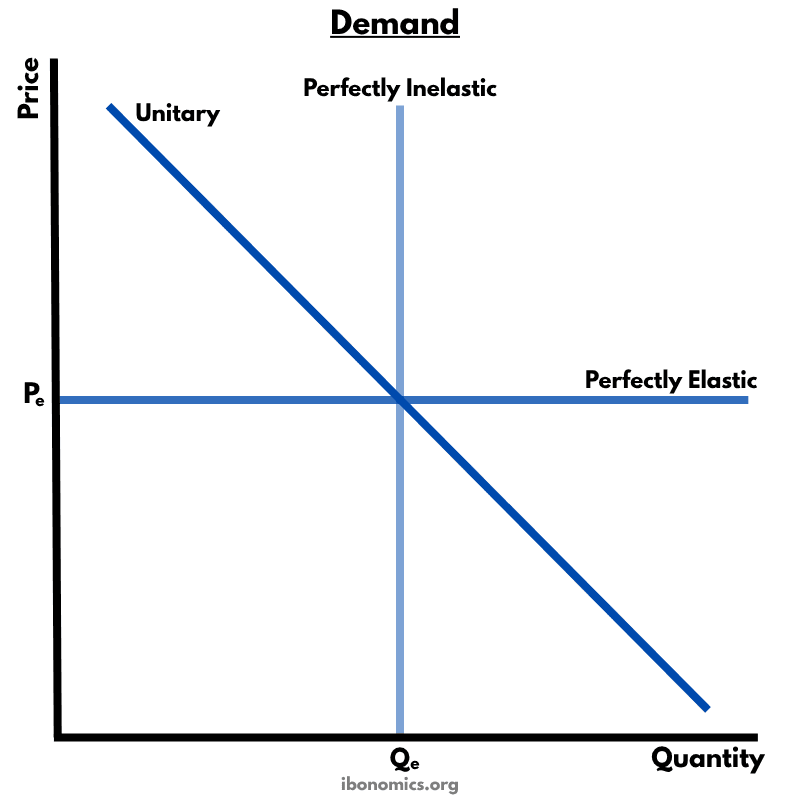
- For an individual background-music supplier, demand may be relatively price elastic because creators can switch between many human and AI alternatives.
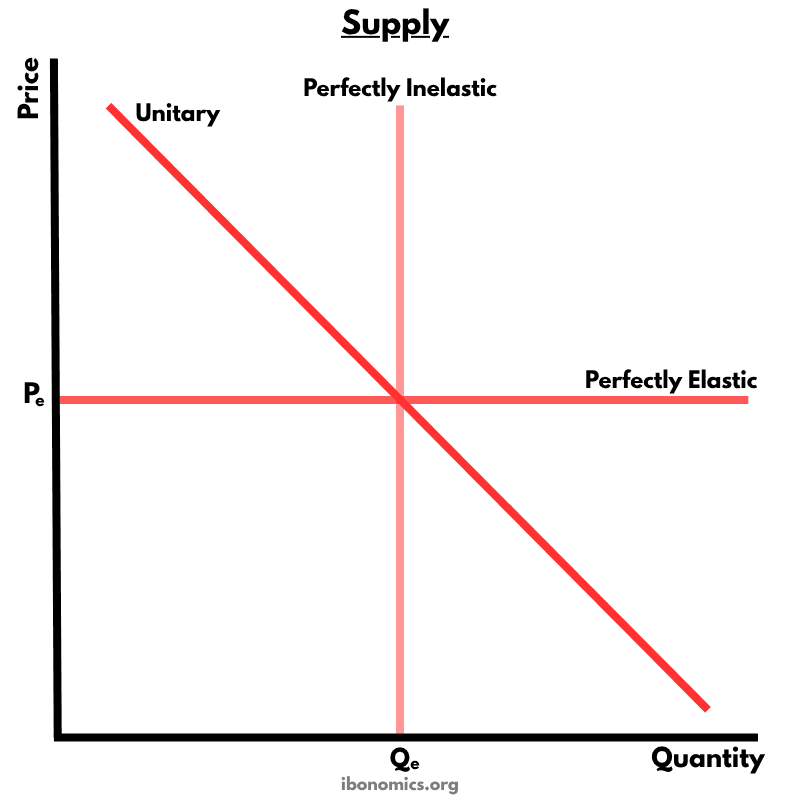
- AI-generated supply can be relatively price elastic because additional tracks can be produced quickly, while human composers face stronger short-run time and skill constraints.
- If AI substitutes for routine composition work, derived demand for some human music labour may fall, but AI can also complement workers who direct, edit and refine outputs.
Background
This case focuses on the market for generic background music, production music and simple beats used in videos, podcasts, games, advertising and other digital content. This is narrower than the overall music industry because buyers often care more about whether a track fits a project than about a particular artist.
Technology is a non-price determinant of supply. Generative AI can reduce the time and human production input needed to create another usable track. If production becomes cheaper or faster, more music can be supplied at each price, shifting the supply curve to the right.
Elasticity affects how strongly the market responds. Price elasticity of demand (PED) depends partly on the availability of substitutes. Price elasticity of supply (PES) depends partly on how quickly producers can change output. These elasticities are likely to differ between AI-generated and traditionally produced background music.
What happened
The supply of AI-generated music expanded rapidly during 2025 and 2026. Deezer reported that fully AI-generated tracks rose from about 10% of daily deliveries when its detection system launched in January 2025 to more than 50% at peak in June 2026. At that peak, the platform was receiving nearly 90,000 fully AI-generated tracks per day.
The upload figures are not a direct measurement of the background-music supply curve, but they show how quickly generative technology can increase the number of finished tracks entering distribution. Importantly, Deezer also reported that fully AI-generated music accounted for only 1–3% of listening. A large increase in available tracks therefore does not automatically mean demand has increased by the same amount.
The background-music and music-library segment may be particularly exposed because tracks are often chosen for function rather than artist identity. A CISAC/PMP Strategy study projected that generative AI could account for around 60% of music-library revenues by 2028. The same study projected 24% of music creators' revenues at risk across music overall, although this is an industry-commissioned forecast rather than an observed employment outcome.
New suppliers have also entered creator-focused music markets. Lunar Boom Music launched in 2024 around an AI-first production model and now offers AI-assisted and royalty-free music for videos, podcasts, games and digital content. It provides a small real-world example of how lower production barriers can allow new suppliers and larger catalogues to enter the background-music market.
The labour-market effect is less certain. Skills England reported in 2026 that creative roles were increasingly shifting from pure 'makers' towards workers who direct and refine AI outputs, while stressing that the overall effect of AI on future role demand remains uncertain.
Timeline
2024
Lunar Boom Music launched around an AI-first production model, illustrating entry by a new supplier using AI-assisted production.
December 2024
CISAC and PMP Strategy published forecasts identifying music libraries as one of the segments most exposed to generative AI.
January 2025
Deezer's AI detection system identified about 10,000 fully AI-generated tracks per day, around 10% of daily content deliveries.
June 2026
Fully AI-generated tracks exceeded 50% of Deezer's new daily uploads at peak, with nearly 90,000 tracks arriving per day.
2026
Skills England reported that some creative roles were shifting from making outputs directly towards directing and refining AI-assisted work.
Using this in the exam
Use this case in a Paper 1 answer about a technology-driven increase in supply, PED, PES or the labour-market consequences of technological change.
For the product market, explain that generative AI lowers production time and costs for generic background music. Draw supply shifting from S1 to S2. Ceteris paribus, equilibrium price falls and equilibrium quantity rises. Do not claim Deezer's upload figures prove the size of this shift: they are evidence of rapidly expanding output, not the supply curve itself.
For PED, define the market carefully. Demand facing one background-music supplier may be relatively elastic because creators can switch to many human, AI and royalty-free substitutes. Demand for background music as a whole may be less elastic because music can be a small part of a creator's total project cost. There is no reliable numerical PED estimate for this market.
For PES, contrast AI and human production. AI-generated supply can respond quickly because many additional tracks can be generated without adding equivalent hours of composer labour. Traditional human supply is less responsive in the short run because time, skill and production capacity are constrained. Again, no reliable numerical PES coefficient is available.
For employment, move to the labour market. If AI-generated tracks substitute for routine human composition, firms may demand fewer hours from composers producing generic cues and beats, shifting the derived demand for this labour to the left. However, AI may complement other workers by increasing demand for editing, selection, creative direction and rights management.
For evaluation, you can consider government intervention. A hypothetical levy on commercial AI-generated music could raise its cost and generate revenue for retraining affected workers. Training subsidies could improve occupational mobility. Transparency or licensing rules could address information and property-rights concerns. However, technological change that lowers production costs is not automatically a market failure, so intervention designed only to protect existing producers may reduce consumer surplus and efficiency.
Syllabus topics
Diagrams to use

Test yourself
Questions this example can answer
- Explain how technological change can cause an increase in the supply of a good or service.
- Using a real-world example, discuss how price elasticity of demand and price elasticity of supply affect the impact of an increase in supply.
- Using real-world examples, evaluate government intervention in a market where technological change affects employment.
Evaluation
Arguments in favour
Retraining support could reduce structural unemployment
If AI reduces derived demand for routine composition work, subsidies for training in AI-assisted production, editing, licensing or other creative skills could improve occupational mobility and help displaced workers move into growing roles.
Transparency and licensing rules could address specific market problems
Clear disclosure can help buyers who care whether music is human-made or AI-generated, while clearer licensing rules can strengthen property rights where copyrighted material is used in AI production. These policies target information or rights issues more directly than simply restricting supply.
A levy could finance adjustment if displacement is substantial
A tax or levy on commercial AI-generated music could raise government revenue that is earmarked for retraining. Its effectiveness would depend on the tax base, enforcement costs and how strongly buyers and producers respond to the higher price.
Arguments against
Lower production costs are not themselves a market failure
A rightward supply shift can lower prices and increase consumer surplus. Taxing AI output simply to protect existing suppliers could reduce these gains and preserve production methods that are more expensive.
A tax could reduce quantity significantly if demand is elastic
Generic AI background music has many substitutes, including human stock music and other AI services. If demand for taxed AI music is relatively elastic, a higher price could cause a large fall in quantity demanded and produce less tax revenue than expected.
Defining taxable AI music would be difficult
Music can range from fully generated tracks to human recordings using AI for only one production step. A levy based on an unclear boundary could create administrative costs and different treatment of economically similar products.
Context and assumptions
The effect depends on how narrowly the market is defined
Demand facing one supplier is likely to be more elastic than demand for background music as a whole because buyers have more close substitutes at the narrower market level.
A surge in supply does not guarantee equivalent demand
AI-generated tracks exceeded 50% of new Deezer uploads at peak but represented only 1–3% of listening. This shows why quantity available and consumer demand should not be treated as the same thing.
AI can substitute for some labour and complement other labour
Routine composition may face weaker derived demand, while workers who combine musical judgement with AI direction, editing and client relationships may become more productive. The employment effect therefore depends on the task rather than simply whether a job is labelled 'music'.
Key terms
- Supply
- The willingness and ability of producers to offer a good or service for sale at different prices over a given period of time.Taught in Unit 2.2: Supply
- Price elasticity of demand
- A measure of the responsiveness of quantity demanded of a good or service to a change in its price.Taught in Unit 2.5: Elasticities of Demand
- Price elasticity of supply
- A measure of the responsiveness of quantity supplied of a good or service to a change in its price.Taught in Unit 2.6: Elasticity of Supply
- Derived demand
- Demand for a factor of production that results from demand for the good or service that the factor helps to produce.
- Structural unemployment
- Unemployment caused by a mismatch between workers' skills or location and the requirements of available jobs.
- Technological change
- Improvements in production methods or technology that can change productivity and the costs of production.
Sources
- 01
AI Music Tops 50% of Daily Uploads on Deezer
Deezer
- 02
CISAC/PMP Strategy AI Study
CISAC and PMP Strategy
- 03
Sector Skills Needs Assessment: Creative Industries
Skills England
- 04
How Lunar Boom Defines an AI-First Music Label
Lunar Boom Music
- 05
Lunar Boom Music: Royalty-Free Music for Creators
Lunar Boom Music
Related case studies
More microeconomics examples you can use in the same answer

Google's AI token usage rose sharply while capacity and efficiency expanded, illustrating demand shifts and short-run inelastic supply.

South Africa taxes vaping liquid to discourage consumption and raise revenue, illustrating how indirect taxes can address market failure.
EU countries use renewable-energy support schemes and auctions to encourage investment, increase clean-energy output and support climate goals.