Welcome to IBonomics! We are excited to launch and hope you find the website useful! Learn more about us here!

Free Trade – Importing Country

Global Economics

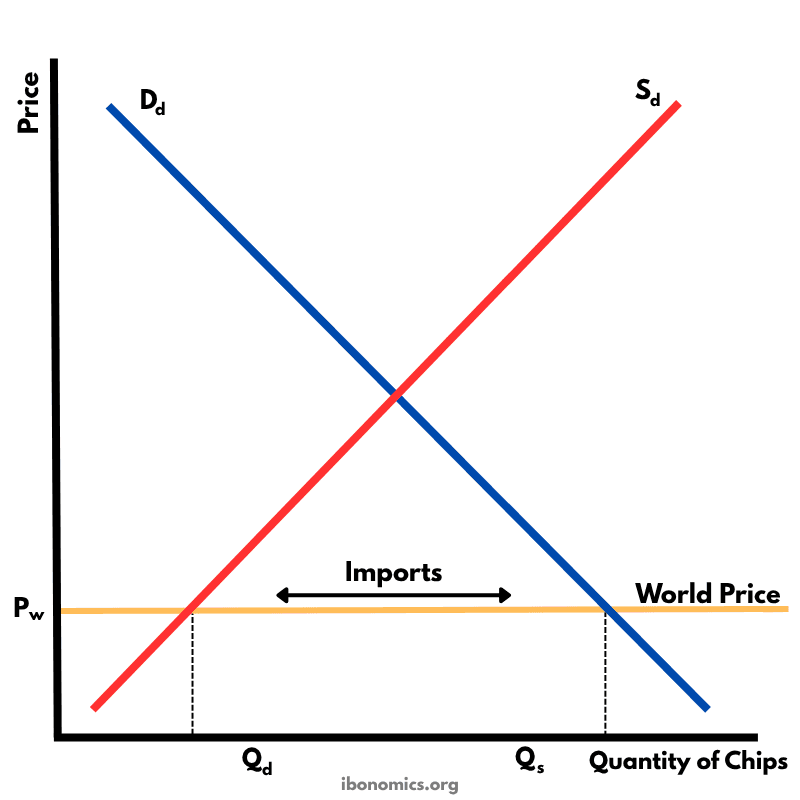
This diagram illustrates how a country imports goods under free trade when the world price is lower than the domestic equilibrium price.
Diagram
Free Trade – Importing Country
Curves and Elements

dd

Dd: Domestic demand for the good (e.g., chips).

sd

Sd: Domestic supply of the good.

pw

Pw: World price, which is lower than the domestic equilibrium price.

qd

Qd: Quantity demanded at the world price.

qs

Qs: Quantity supplied domestically at the world price.

imports

Imports: The difference between Qd and Qs, filled by foreign producers.

Key Explanations
1

In autarky (no trade), the domestic market reaches equilibrium where the domestic supply (Sd) intersects domestic demand (Dd).

2

When the world price (Pw) is lower than the domestic equilibrium price, consumers increase their quantity demanded to Qd, while domestic producers reduce their supply to Qs.

3

The difference between Qd and Qs is filled by imports from abroad, allowing domestic consumers to benefit from cheaper goods.

4

Consumers gain from lower prices and increased quantity consumed, while domestic producers may suffer losses due to lower prices and reduced sales.

5

Free trade allows the country to specialize based on comparative advantage, increasing overall economic welfare and efficiency.

Example Exam Question

Try Our Interactive Quizzes

At Ibonomics we believe in learning by doing. Test your understanding of economic diagrams with our interactive quizzes.

More Global Economics Diagrams

Explore other diagrams from the same unit to deepen your understanding

global-economics
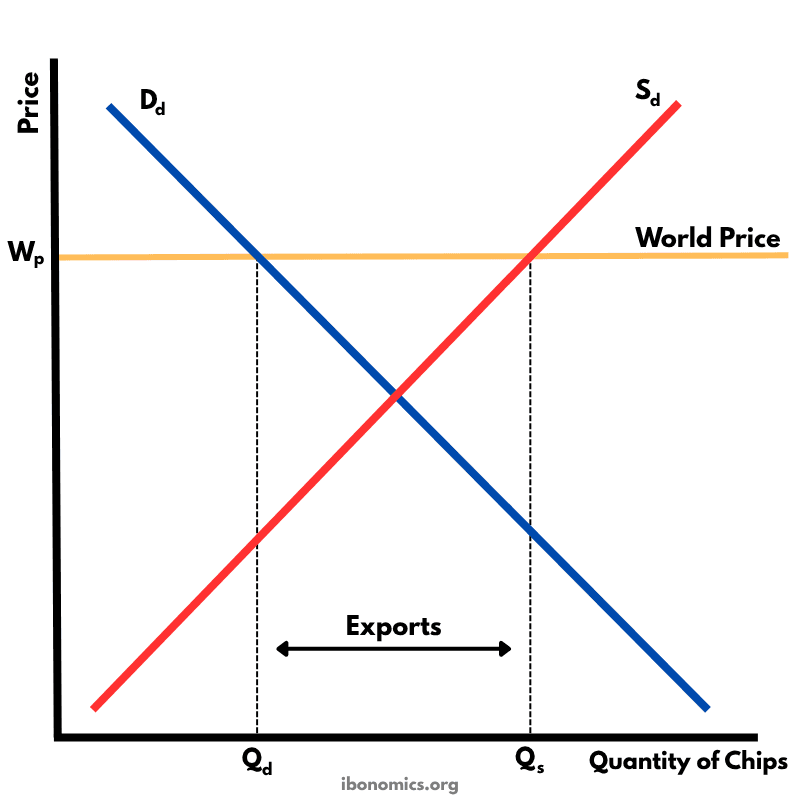
Free Trade – Exporting Country

This diagram shows how a country exports goods under free trade when the world price is higher than the domestic equilibrium price.

6 curves/elements5 explanations
global-economics
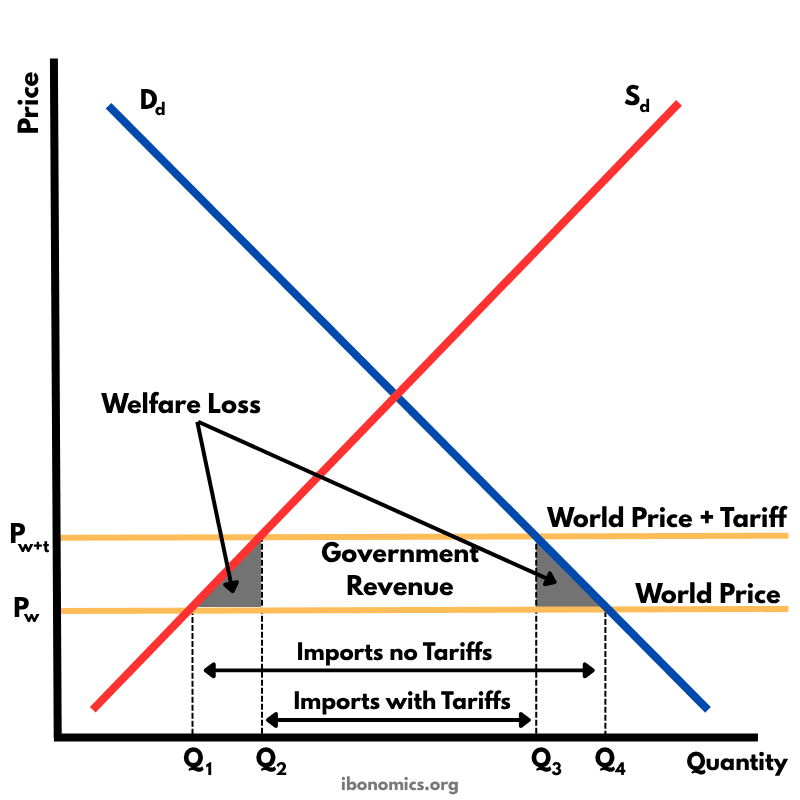
Tariff Diagram – Protectionism

This diagram shows the effects of a tariff imposed on imported goods. A tariff raises the price of imports, protecting domestic producers but creating welfare losses.

12 curves/elements5 explanations
global-economics
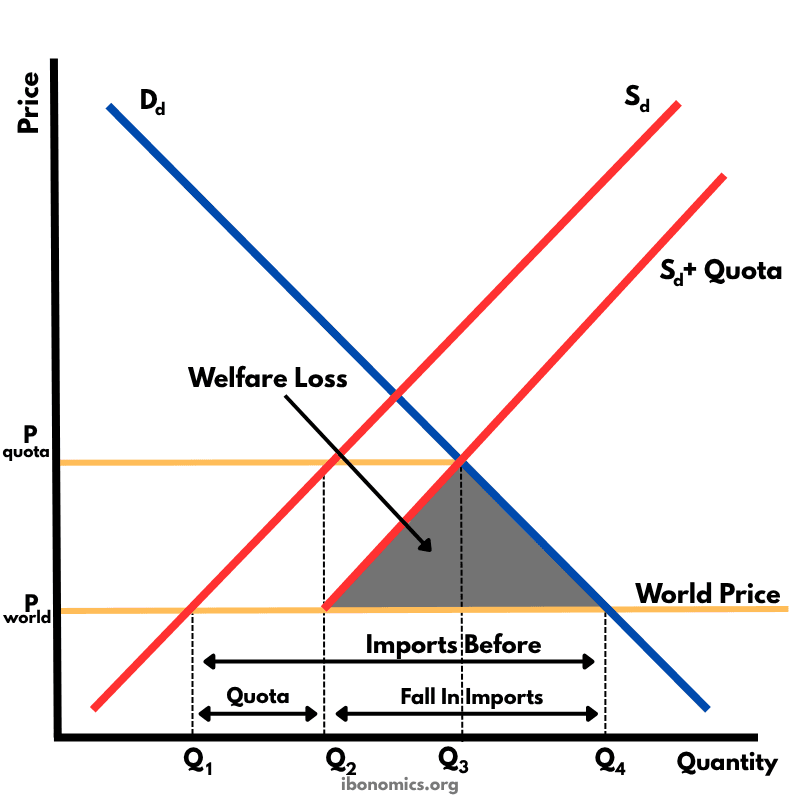
Quota Diagram – Protectionism

This diagram illustrates the effects of an import quota, a trade protection measure that limits the quantity of a good that can be imported. Quotas raise domestic prices, benefit local producers, and reduce consumer surplus.

12 curves/elements5 explanations
global-economics
Production Subsidy Diagram – Protectionism

This diagram illustrates the effects of a production subsidy, where the government supports domestic producers to lower their costs and increase output. It is a form of protectionism without raising consumer prices directly.

9 curves/elements5 explanations
global-economics
Export Subsidy – Price Effects and Welfare Loss

This diagram shows how an export subsidy raises the domestic price above the world price, encouraging producers to export more while reducing consumer welfare and creating deadweight losses.

11 curves/elements5 explanations
global-economics
Comparative Advantage – Two-Country PPC

This diagram uses production possibility curves (PPCs) for two countries—Grania and Chipia—to illustrate absolute and comparative advantage and the potential gains from trade.

5 curves/elements5 explanations