Trade Diversion – Switching from a Lower Cost External Producer to a Higher Cost Bloc Member
Global Economics
This diagram illustrates trade diversion, which occurs when a country joins a trading bloc and must impose a common external tariff on non members. As shown in the diagram, the country originally imports from the USA at the lowest price P_USA. After joining the customs union, it must apply the common external tariff to the USA, raising the relevant import price to P_USA+t. Although China is a higher cost producer than the USA, China becomes the cheaper source once the tariff is imposed. Imports therefore shift away from the lower cost USA to the higher cost China, reducing efficiency. Consumers now purchase from a less efficient producer at a higher price than before, leading to a welfare loss and a misallocation of global resources.
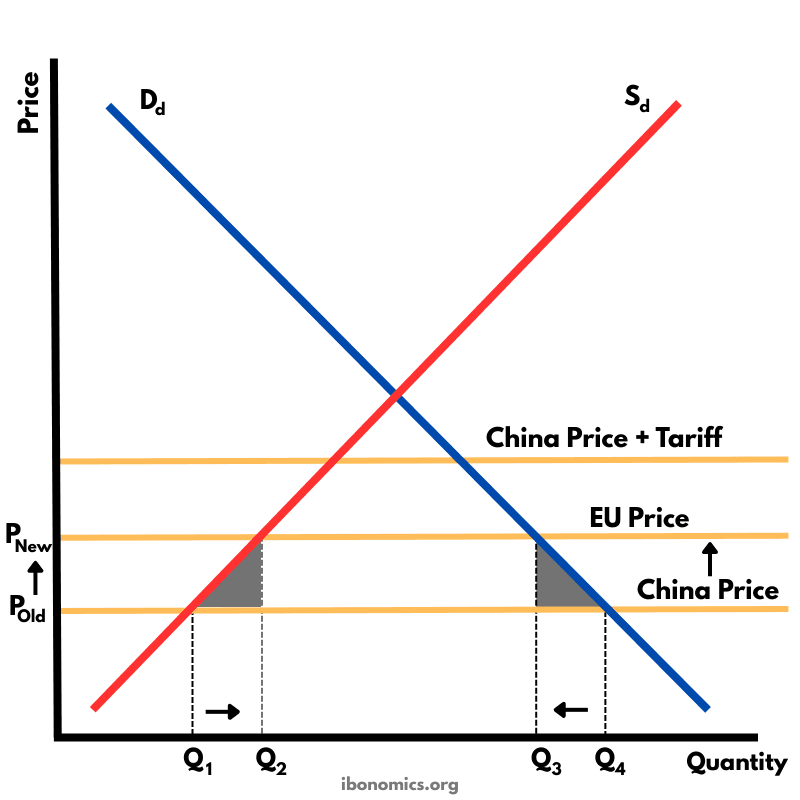
Curves and Elements
p usa
USA No Tariff Price (P_USA): The lowest world price before joining the trading bloc.
p usa tariff
USA + Tariff Price (P_USA+t): The higher import price once the common external tariff is imposed on the USA.
p china
China Price (P_China): The price of imports from a higher cost member country, which becomes artificially cheaper once tariffs redirect trade.
domestic supply
Domestic Supply (Sd): The supply from domestic firms, which may contract as competition from bloc members increases.
domestic demand
Domestic Demand (Dd): Consumer demand, which shifts along the curve when prices rise after trade diversion.
Before joining the trading bloc, the importing country buys from the USA at price P_USA, which is the lowest cost option. Domestic supply is limited, and most consumption occurs through these low cost imports.
After joining the customs union, the country must impose a common external tariff on all non members, including the USA. This raises the effective price of US goods to P_USA+t.
China, as a member of the customs union, can export without tariffs at price P_China. Even though China is a higher cost producer than the USA, it becomes the cheaper option once the tariff is applied to the USA.
Imports therefore divert from the lower cost US supplier to the higher cost Chinese supplier. This shift represents trade diversion and is considered inefficient because resources move to producers with a higher opportunity cost.
Consumers lose out because they now face a higher price than before, leading to reduced consumer surplus. Production becomes concentrated in a less efficient member country rather than in the globally most efficient producer.
A further drawback of joining the trading bloc is that domestic firms may face stronger competition from bloc members. This can lead to short term unemployment as less efficient domestic industries contract under competitive pressure.
More Global Economics Diagrams
Explore other diagrams from the same unit to deepen your understanding
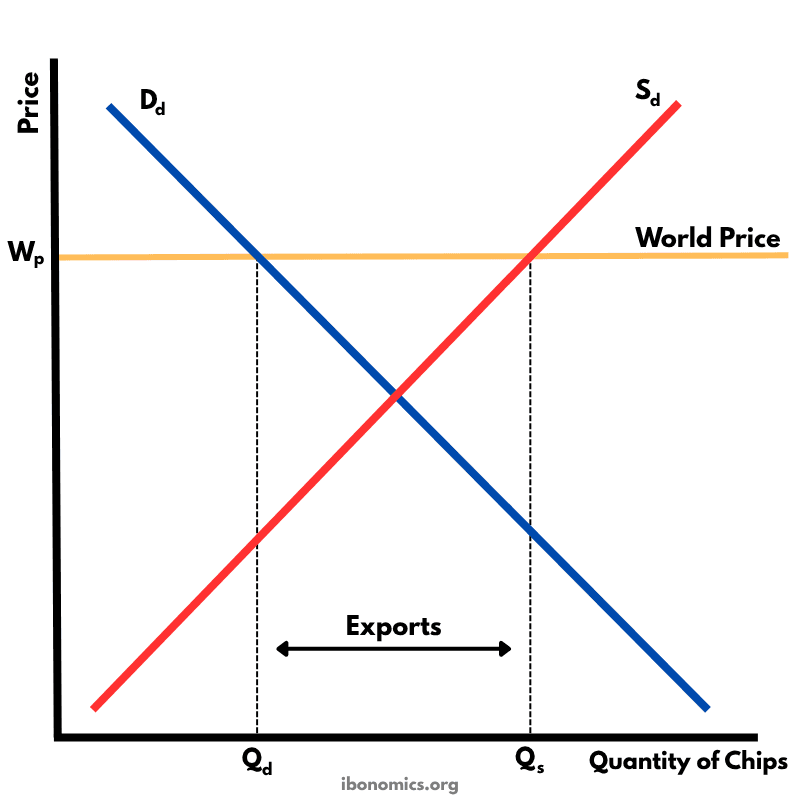
This diagram shows how a country exports goods under free trade when the world price is higher than the domestic equilibrium price.
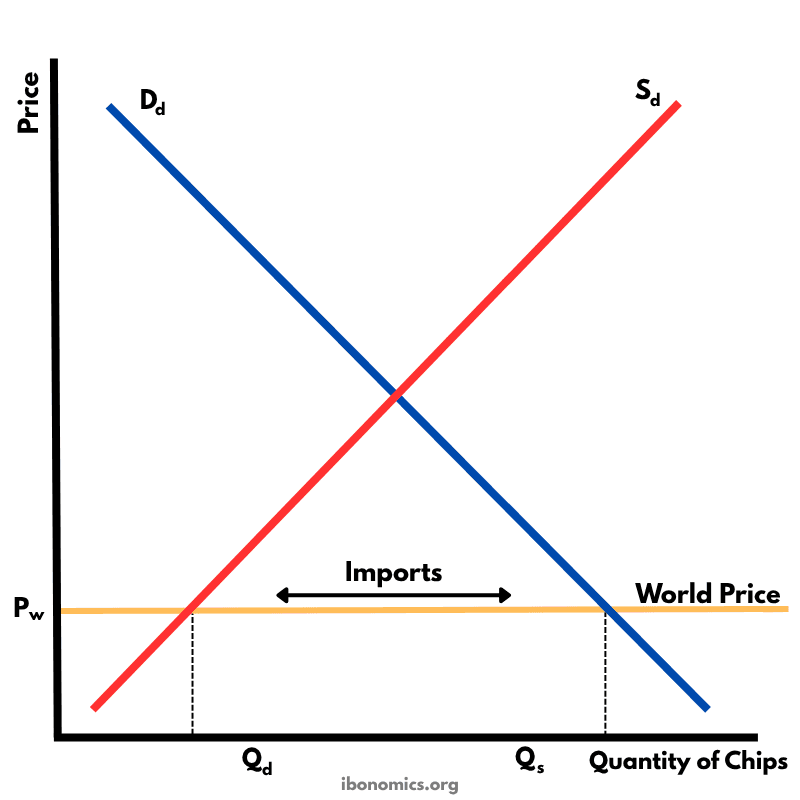
This diagram illustrates how a country imports goods under free trade when the world price is lower than the domestic equilibrium price.
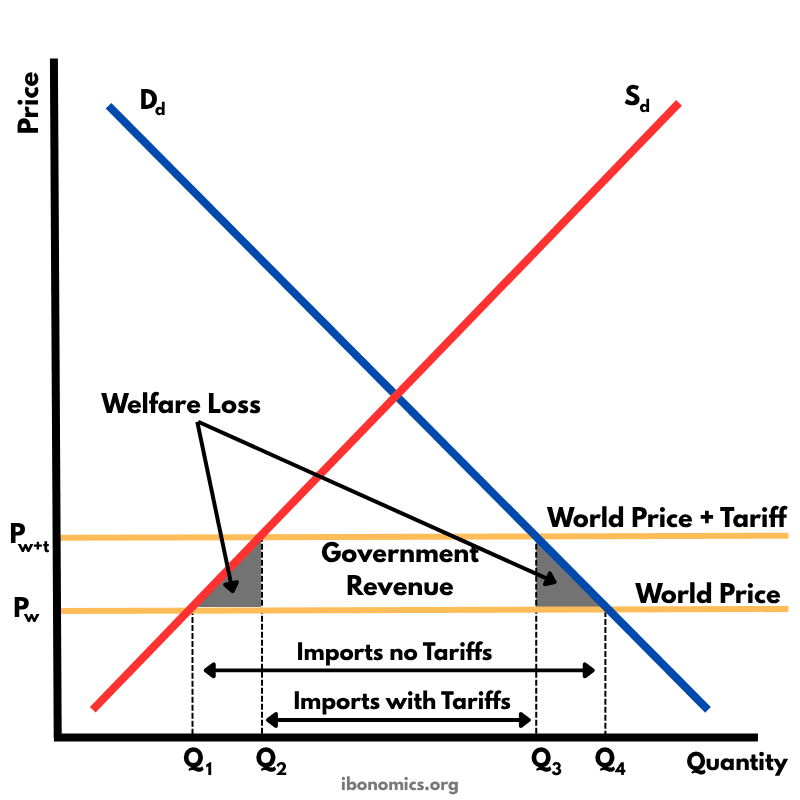
This diagram shows the effects of a tariff imposed on imported goods. A tariff raises the price of imports, protecting domestic producers but creating welfare losses.
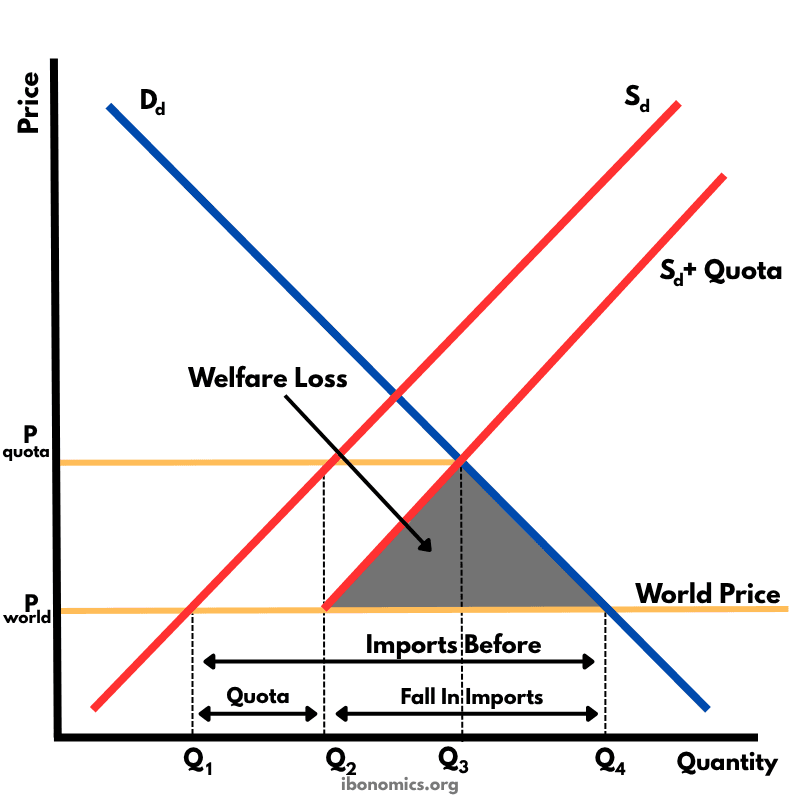
This diagram shows the impact of an import quota that limits how many units of a good can be imported. By restricting imports, the domestic price rises above the world price, domestic producers expand output, consumers buy less, and there is a net welfare loss.
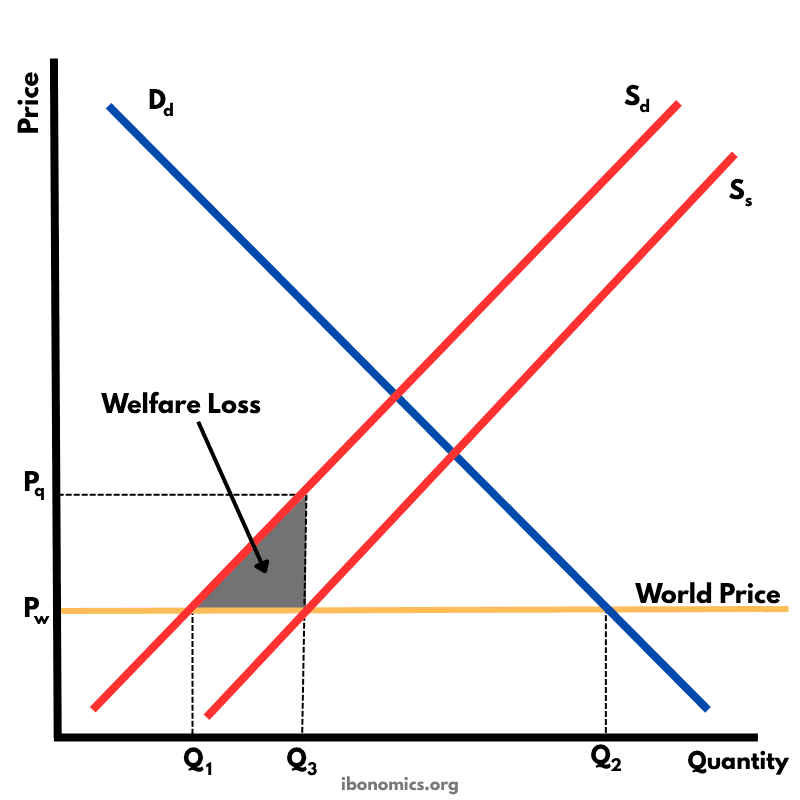
This diagram illustrates the effects of a production subsidy, where the government supports domestic producers to lower their costs and increase output. It is a form of protectionism without raising consumer prices directly.
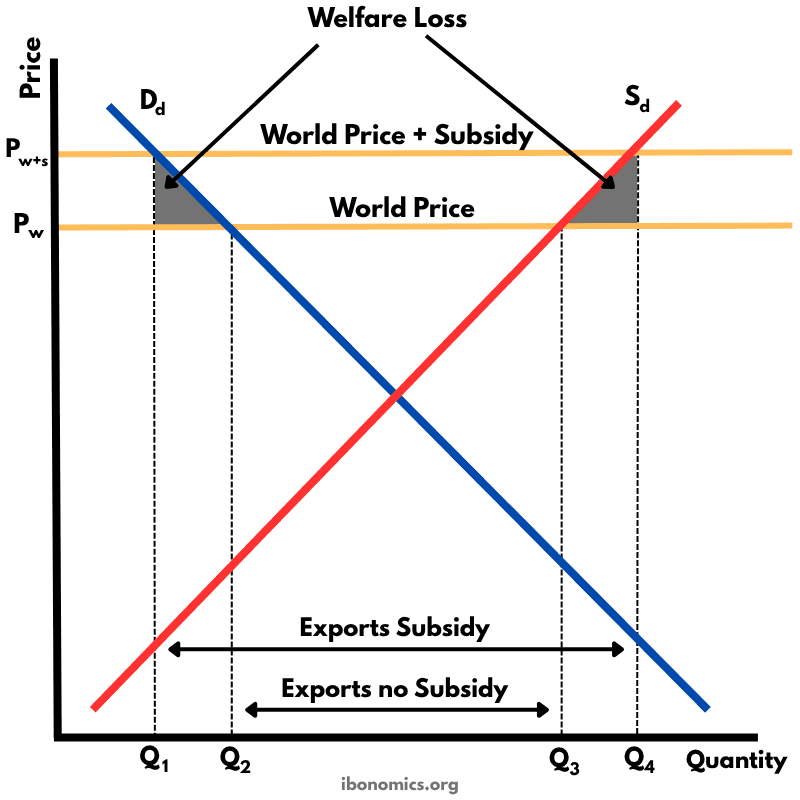
This diagram shows how an export subsidy raises the domestic price above the world price, encouraging producers to export more while reducing consumer welfare and creating deadweight losses.