Global Economics in IB Economics: Trade, Exchange Rates, Development and International Connections
A clear overview of IB Global Economics, covering trade, protectionism, exchange rates, balance of payments, development and international interdependence.
Global Economics in IB Economics: Trade, Exchange Rates, Development and International Connections
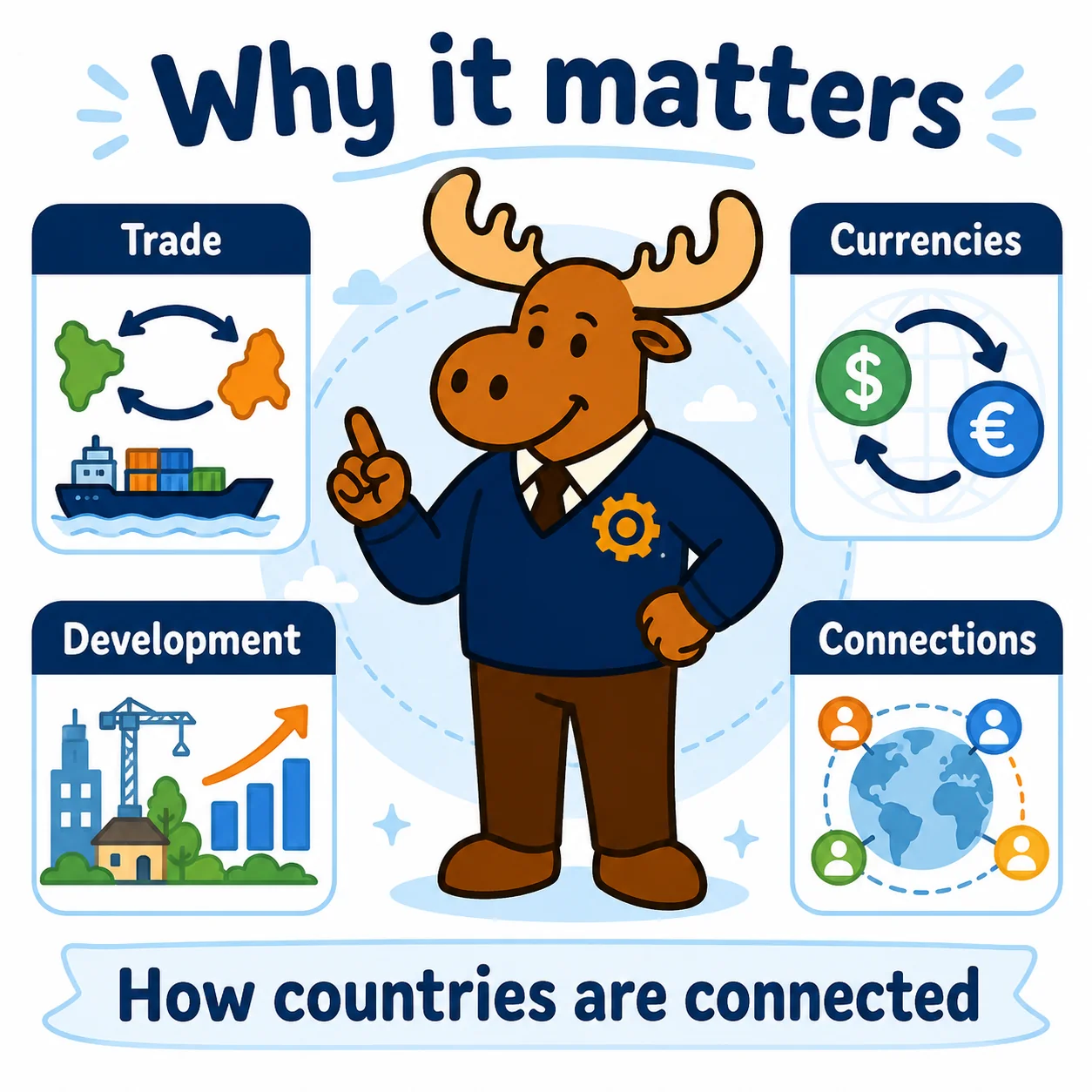
Global economics studies how countries are connected through trade, finance, exchange rates, migration, investment, development and international institutions. Instead of analysing one domestic market or one national economy in isolation, it looks at how economies interact across borders.
For IB Economics students, global economics is important because many economic decisions have international effects. A tariff can change consumer prices and producer incentives. A currency depreciation can affect exports, imports and inflation. A financial crisis in one country can reduce demand in another. Development policies can influence poverty, education, health and sustainability.
The key idea is interdependence. Countries depend on each other for goods, services, raw materials, capital, technology and markets. This creates opportunities, but also risks and trade-offs.
What global economics is really about
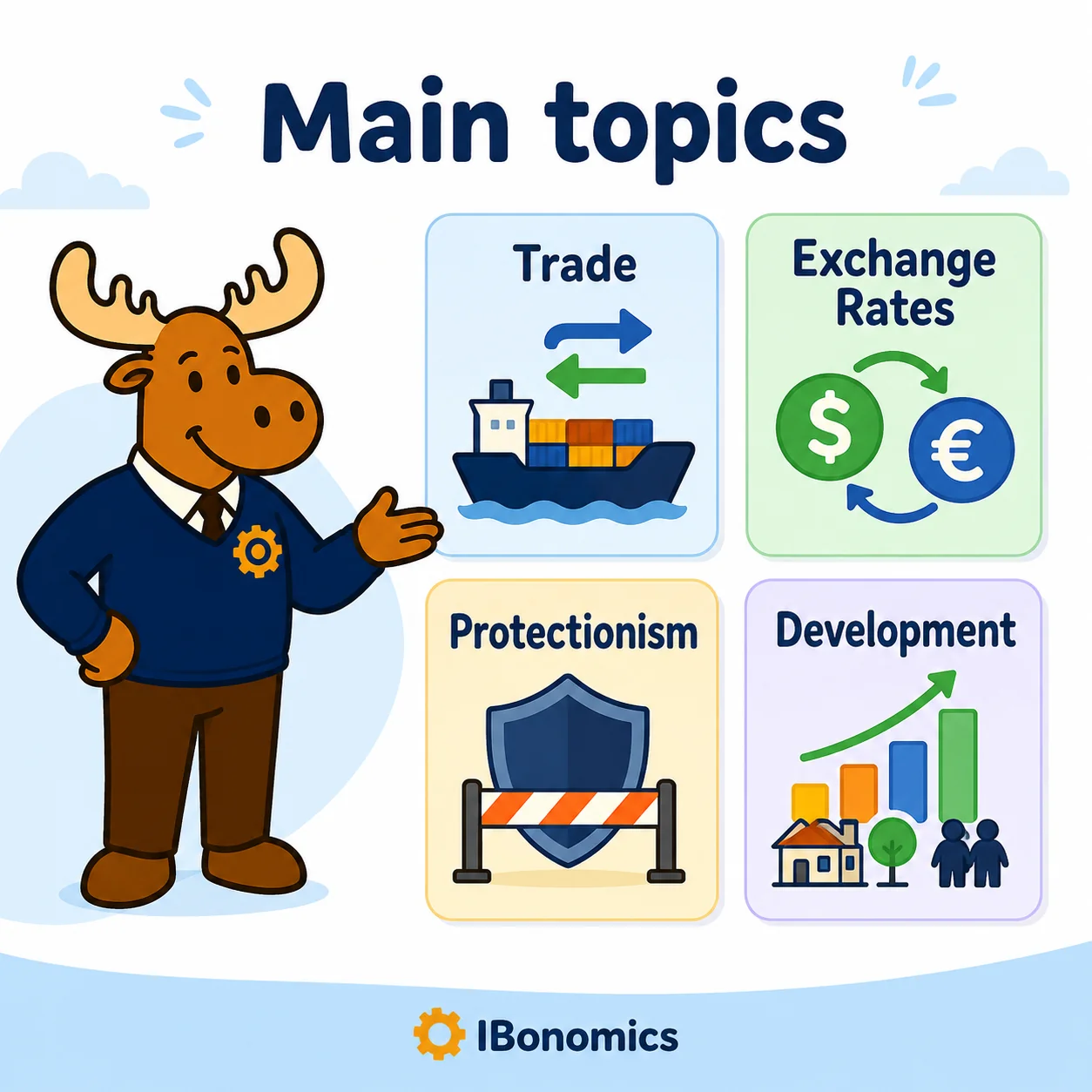
Global economics examines economic relationships between countries. It asks questions such as: Why do countries trade? Who gains and loses from trade? Should governments protect domestic industries? How do exchange rates affect inflation and competitiveness? Why are some countries richer than others? What makes development sustainable?
The IB course connects global economics to several major themes: international trade, trade protection, economic integration, exchange rates, the balance of payments, sustainable development and growth strategies.
These topics are linked. For example, a country’s exchange rate affects the price of exports and imports. This influences the current account of the balance of payments. Trade patterns may affect economic growth, employment and development. Government intervention can support domestic firms, but it may also reduce efficiency or create tensions with trading partners.
Global economics is therefore not just about foreign trade. It is about how open economies make choices under conditions of scarcity, interdependence and unequal development.
International trade and specialisation
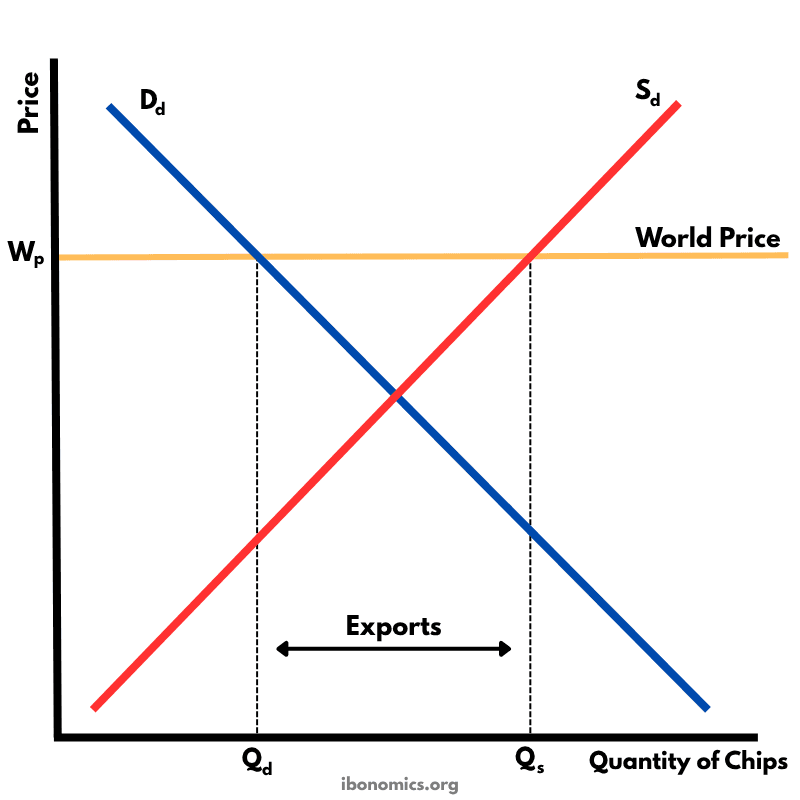
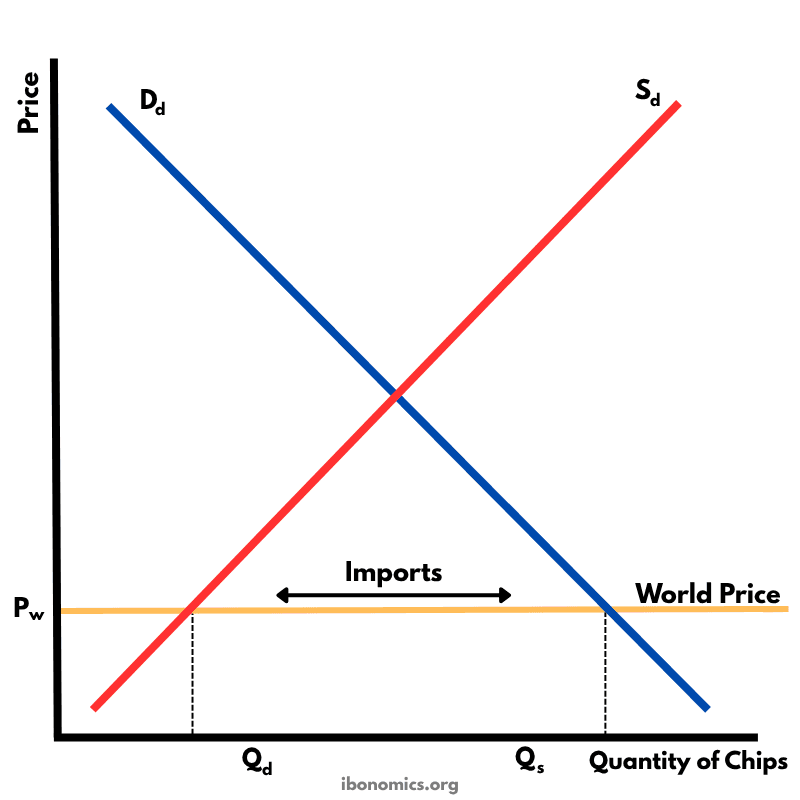
International trade occurs when countries exchange goods and services with each other. The basic reason for trade is that countries have different resources, costs, technologies and productive strengths.
Specialisation means focusing production on goods or services where an economy has an advantage. This can allow countries to produce more efficiently and consume beyond what they could produce alone.
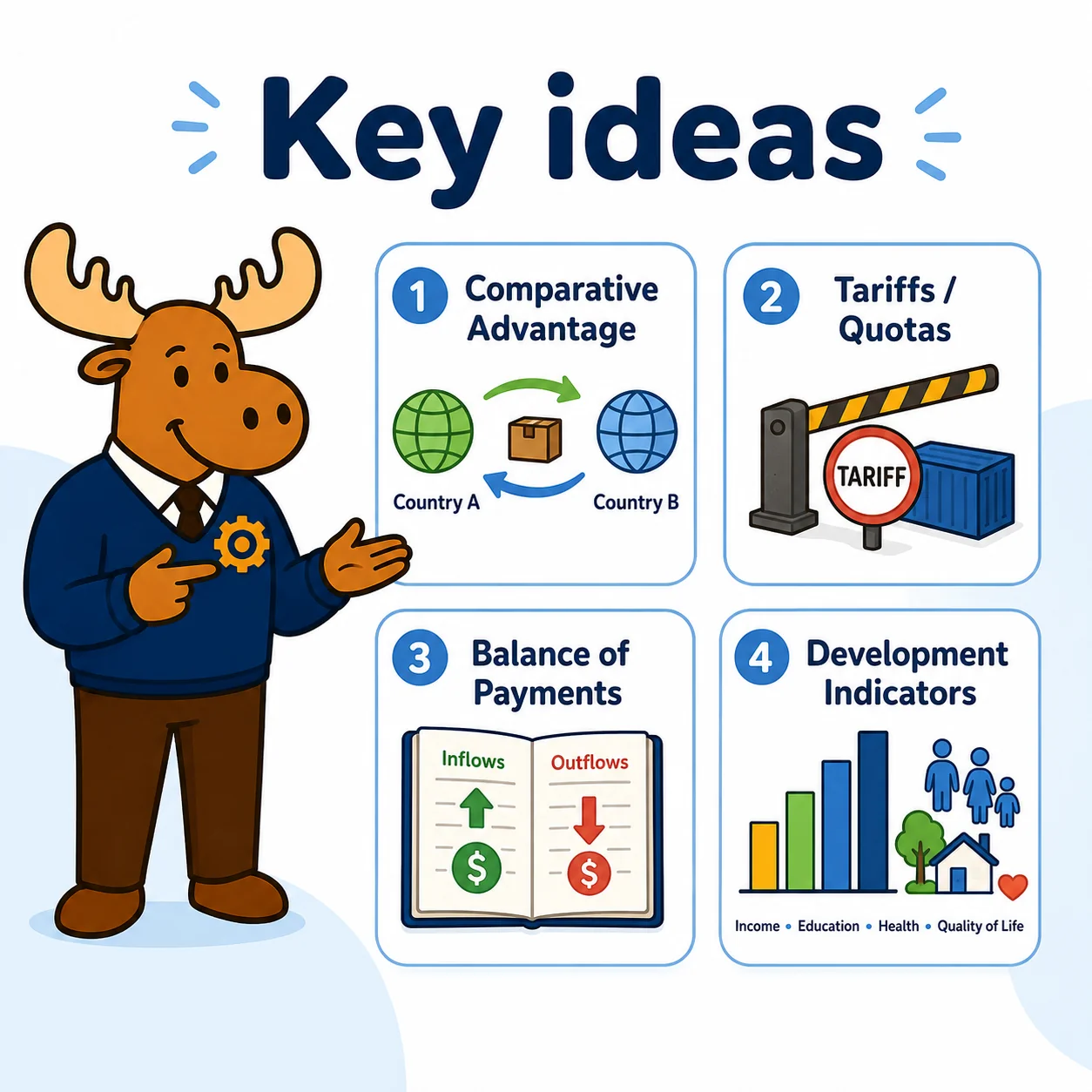
A key IB idea is comparative advantage. A country has a comparative advantage when it can produce a good at a lower opportunity cost than another country. Even if one country is absolutely better at producing everything, both countries can still gain from trade if they specialise according to comparative advantage.
The benefits of trade may include lower prices, greater consumer choice, increased competition, access to larger markets, economies of scale and more efficient resource allocation. However, trade can also create adjustment costs. Some domestic firms may lose market share, and some workers may become structurally unemployed if industries decline.
This is why trade is usually evaluated using both efficiency and equity. Free trade may increase total welfare, but the gains and losses may not be distributed equally.
You can explore this in more depth in the benefits of international trade.
Trade protection
Trade protection refers to government policies that restrict imports or support domestic producers against foreign competition. Common forms include tariffs, quotas, subsidies and administrative barriers.
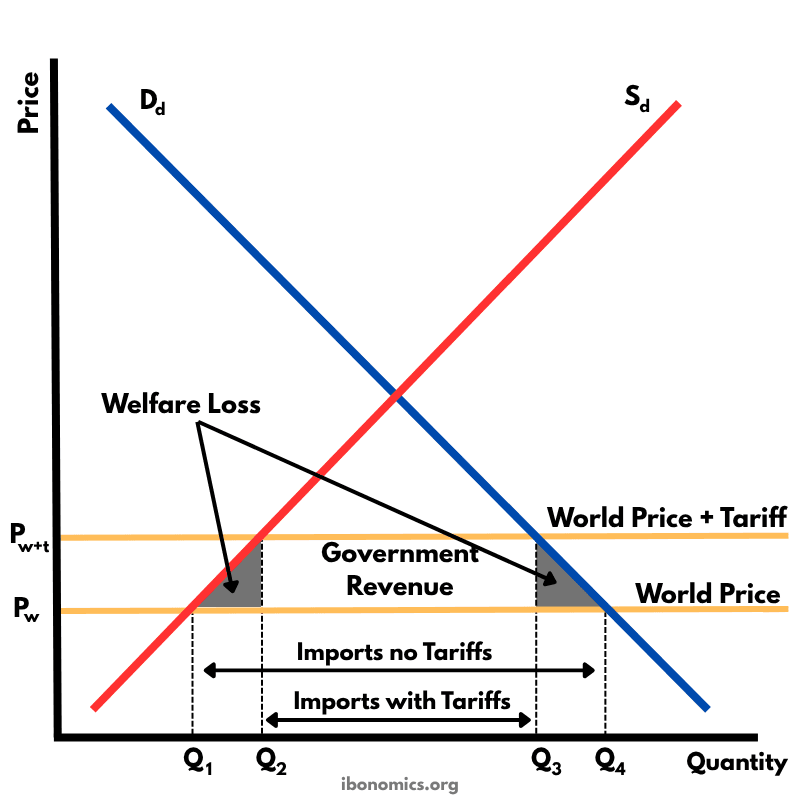
A tariff is a tax on imports. In a tariff diagram, the vertical axis shows price and the horizontal axis shows quantity. A tariff raises the price of the imported good in the domestic market. Domestic producers supply more, domestic consumers buy less, and imports fall. The government gains tariff revenue, but consumers lose because they pay a higher price and consume less. There is usually a welfare loss because some mutually beneficial trade no longer takes place.
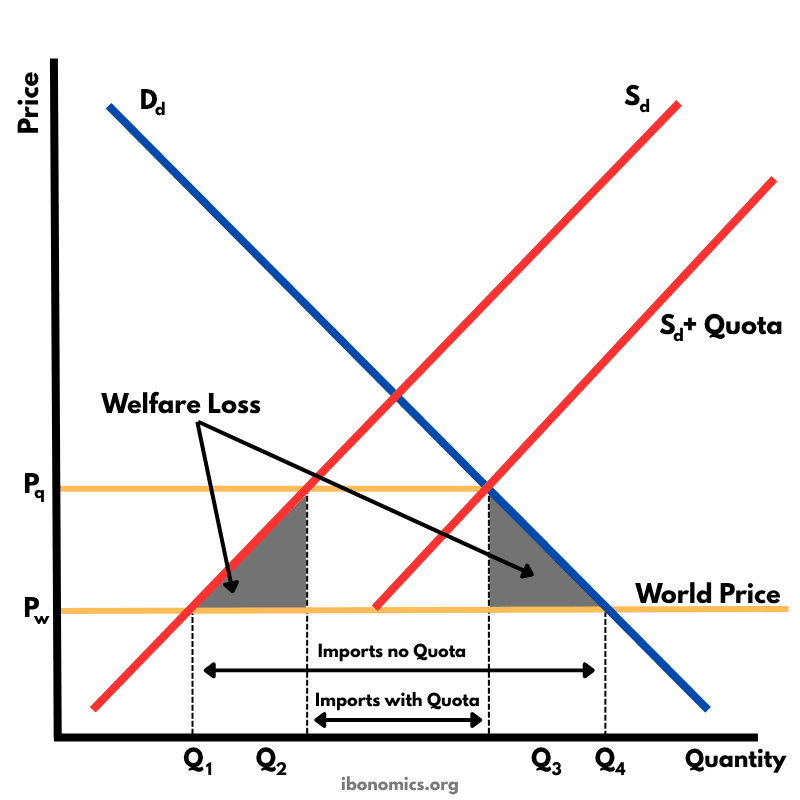
A quota is a physical limit on the quantity of imports allowed into a country. Like a tariff, it raises the domestic price and reduces imports. However, instead of government tariff revenue, the benefit from the higher price may go to foreign exporters or import licence holders, depending on how the quota is managed.
A subsidy to domestic producers lowers their costs of production. This can help local firms compete with imports, but it creates an opportunity cost for the government and may encourage inefficient production.
Governments may justify protectionism by arguing that it protects infant industries, preserves employment, prevents dumping, improves national security or corrects unfair competition. However, protectionism can also reduce consumer welfare, increase prices, lower efficiency and provoke retaliation from trading partners.
This topic is split across types of trade protection and arguments for and against trade protection.
Economic integration
Economic integration occurs when countries reduce trade barriers and coordinate economic policies. It can take different forms, including free trade areas, customs unions, common markets and monetary unions.
A free trade area removes trade barriers between member countries, but each country keeps its own trade policy toward non-members. A customs union goes further by adopting a common external tariff. A common market allows free movement of goods, services, capital and labour. A monetary union uses a shared currency and usually a common monetary policy.
Economic integration can increase trade, competition, investment and efficiency. Firms may access larger markets, consumers may benefit from lower prices, and countries may gain from deeper specialisation.
However, integration also has costs. Countries may lose some policy independence. Domestic firms may face stronger competition. A shared currency can make it harder for individual countries to respond to asymmetric shocks because they no longer control their own exchange rate or monetary policy.
In IB essays, integration should be evaluated by considering both trade creation and trade diversion. Trade creation occurs when integration allows consumers to buy from more efficient producers within the bloc. Trade diversion occurs when trade shifts from a more efficient non-member country to a less efficient member country because of external barriers.
You can review this area through economic integration.
Exchange rates
An exchange rate is the price of one currency in terms of another currency. For example, it tells you how many units of one currency are needed to buy one unit of another.
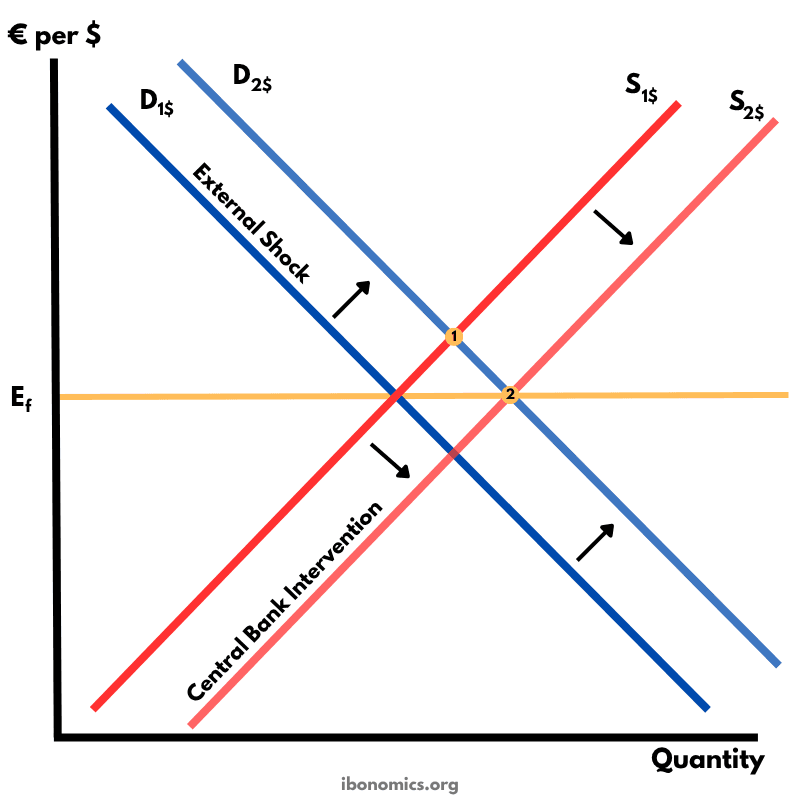
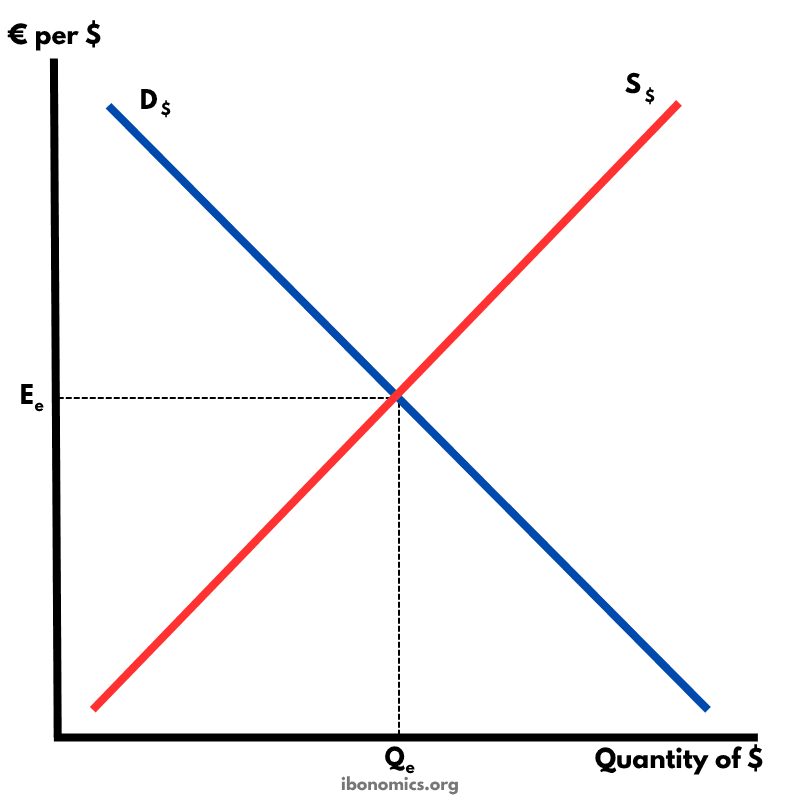
In a floating exchange rate system, the exchange rate is determined by demand and supply in the foreign exchange market. The vertical axis shows the exchange rate, and the horizontal axis shows the quantity of the currency. Demand for a currency comes from foreigners who want to buy that country’s exports, assets or financial investments. Supply of a currency comes from domestic residents who want to buy foreign goods, services or assets.
If demand for a currency increases, the demand curve shifts right. The currency appreciates, meaning its value rises. Exports become more expensive for foreign buyers, while imports become cheaper for domestic consumers. This may reduce export competitiveness but lower import prices.
If supply of a currency increases, the supply curve shifts right. The currency depreciates, meaning its value falls. Exports become cheaper for foreign buyers, while imports become more expensive for domestic consumers. This may improve export competitiveness but increase imported inflation.
Exchange rates are important because they affect trade flows, inflation, foreign debt, business confidence and living standards. However, the final impact depends on price elasticity of demand for exports and imports, the size of import dependence, and how firms and consumers respond over time.
For a detailed explanation, see exchange rates.
Balance of payments
The balance of payments records all economic transactions between residents of one country and the rest of the world over a period of time.
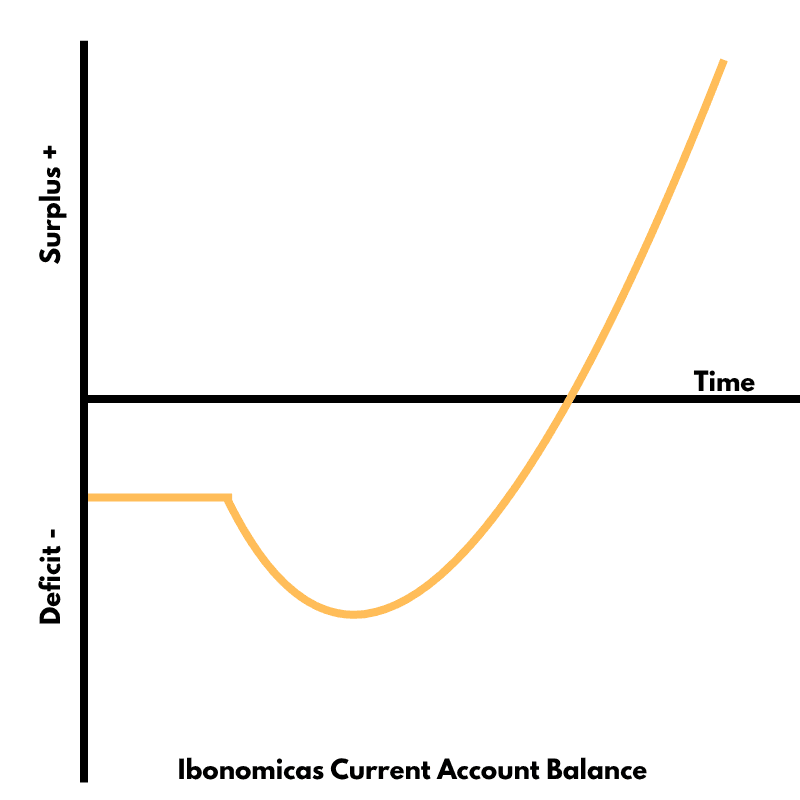
The current account includes trade in goods, trade in services, primary income and secondary income. A current account deficit means money flowing out for these items is greater than money flowing in. A current account surplus means money flowing in is greater than money flowing out.
A deficit is not always bad. It may reflect strong domestic demand, investment in productive capital or access to cheaper imports. However, persistent deficits can become a concern if they are financed by unsustainable borrowing or if they reflect weak export competitiveness.
A surplus is not always good either. It may indicate strong competitiveness, but it can also reflect weak domestic consumption or excessive reliance on external demand.
The balance of payments links closely to exchange rates. A current account deficit may put downward pressure on the currency if demand for imports is high relative to demand for exports. A depreciation may then help correct the deficit by making exports cheaper and imports more expensive, although this depends on elasticity.
This topic is covered in the balance of payments.
Development and measuring progress
Economic development refers to improvements in living standards, welfare and quality of life. It is broader than economic growth. Growth focuses mainly on increases in real output, while development includes health, education, income, equality, freedom, sustainability and access to basic needs.
Real GDP per capita is useful, but it is limited. It does not show income distribution, environmental damage, unpaid work or differences in health and education. This is why development is often measured using broader indicators, such as composite measures that combine income, education and life expectancy.
IB students should distinguish carefully between growth and development. A country can experience economic growth without broad-based development if the gains are captured by a small group or if growth causes environmental degradation. Similarly, development can sometimes improve through better public health, education or governance even when growth is modest.
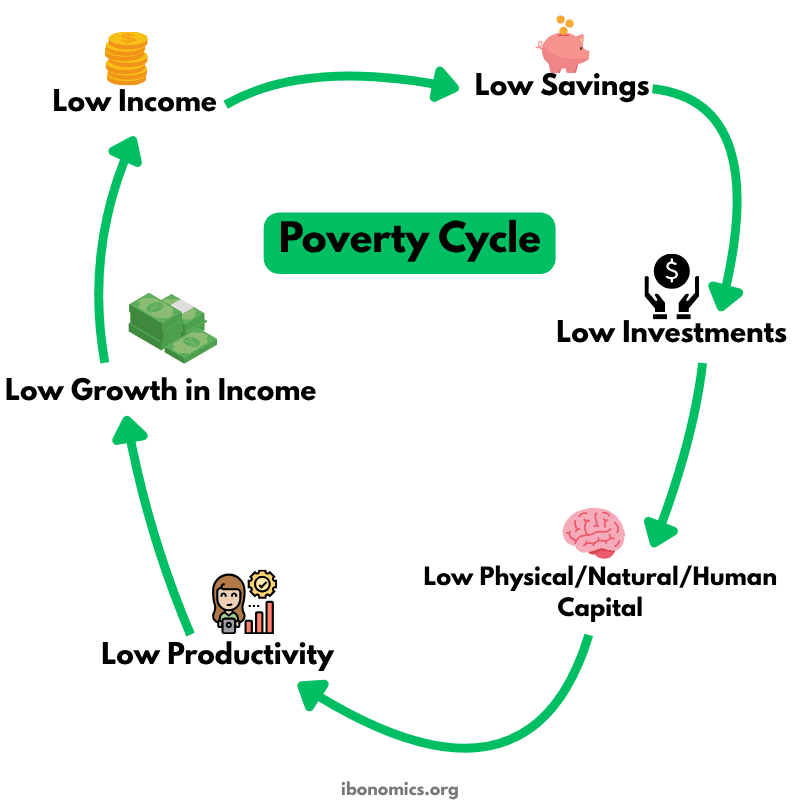
The development part of global economics asks why some countries face persistent barriers. These may include poor infrastructure, low human capital, weak institutions, dependence on primary commodities, debt, corruption, conflict, capital flight, limited access to credit and vulnerability to climate change.
You can continue with measuring development and barriers to growth and development.
Sustainable development and growth strategies
Sustainable development means meeting the needs of the present without compromising the ability of future generations to meet their own needs. In IB Economics, this connects development to environmental limits, equity and long-term resource use.
Growth and development strategies can be market-oriented, interventionist or outward-oriented. Market-oriented strategies may include trade liberalisation, privatisation, deregulation and foreign direct investment. Interventionist strategies may include public investment in education, healthcare, infrastructure and industrial policy. Outward-oriented strategies encourage participation in international trade and global markets.
No single strategy works perfectly in all countries. A policy that succeeds in one context may fail in another because of differences in institutions, geography, political stability, resource endowments or human capital.
For example, trade liberalisation may improve efficiency and export opportunities, but it may also expose domestic firms to competition before they are ready. Public investment in education may support long-term development, but it requires funding and may take years to produce measurable results.
This is why IB evaluation should consider context. Development policies should be judged not only by whether they increase GDP, but also by their effects on poverty, inequality, sustainability, employment and resilience.
You can study this further in sustainable development and growth and development strategies.
IB exam relevance and common mistakes
Global economics is highly relevant for IB exams because it combines diagrams, definitions, real-world examples and evaluation.
A strong answer defines the key concept, applies the correct diagram or model, explains the chain of causation and evaluates the likely effects on different stakeholders. For example, in a tariff essay, a strong answer explains how the tariff raises the domestic price, reduces imports, increases domestic production, lowers domestic consumption, creates government revenue and causes welfare losses.
A common mistake is saying that trade is always good or protectionism is always bad. IB Economics expects more balanced analysis. Trade can increase efficiency and choice, but it can also create structural unemployment or increase dependency. Protectionism can protect jobs or infant industries, but it can also raise prices and reduce efficiency.
Another common mistake is confusing appreciation and depreciation. Appreciation means a currency rises in value. Depreciation means it falls in value. Students should then explain the effect on export prices, import prices, inflation and current account performance.
Students also sometimes treat economic growth and development as the same thing. Growth is about real output. Development is about broader living standards and welfare. This distinction is essential in global economics.
Diagram accuracy matters too. In exchange rate diagrams, the vertical axis should show the price of the currency, and the horizontal axis should show the quantity of the currency. In tariff diagrams, students should clearly show the world price, tariff-inclusive price, domestic quantity supplied, domestic quantity demanded, imports and welfare effects.
Real-world evaluation: interdependence creates gains and risks
Global economics helps explain why international connections can improve welfare. Trade allows countries to specialise. Exchange rates help adjust external imbalances. Foreign investment can bring capital and technology. Development strategies can reduce poverty and improve living standards.
However, interdependence also creates vulnerability. A country that depends heavily on imported food or energy may suffer when global prices rise. A country dependent on one export commodity may face instability when world demand falls. A country integrated into global financial markets may be affected by interest rate changes in larger economies.
This is why evaluation is central. Policies should be judged by their effects on efficiency, equity, sustainability and resilience. The best answer often depends on the country’s level of development, export structure, institutional quality, fiscal capacity and exposure to external shocks.
Global economics is therefore not about memorising whether trade, protectionism or development aid is good or bad. It is about explaining trade-offs in a connected world.
Conclusion
Global economics in IB Economics is about how countries interact through trade, exchange rates, financial flows, integration and development. It shows how national choices are shaped by international relationships.
International trade can increase efficiency and consumer choice. Protectionism can support domestic producers but often creates welfare losses. Exchange rates affect competitiveness, inflation and the balance of payments. Development requires more than growth; it also involves education, health, equity, sustainability and institutional progress.
The strongest IB answers connect diagrams to real-world context. They explain cause and effect clearly, then evaluate how outcomes differ across stakeholders, time periods and countries.
Related syllabus topics
Benefits of International Trade
Unit 4.1: Benefits of International Trade
Types of Trade Protection
Unit 4.2: Types of Trade Protection
Arguments for and against trade control/protection
Unit 4.3: Arguments for and against trade control/protection
Economic Integration
Unit 4.4: Economic Integration
Exchange Rates
Unit 4.5: Exchange Rates
Balance of Payments
Unit 4.6: Balance of Payments
Sustainable Development
Unit 4.7: Sustainable Development
Measuring Development
Unit 4.8: Measuring Development
Barriers to Economic Growth and/or Economic Development
Unit 4.9: Barriers to Economic Growth and/or Economic Development
Economic Growth and/or Economic Development Strategies
Unit 4.10: Economic Growth and/or Economic Development Strategies